

arcing to the rectangle
conversations about publishing, the intense love and despair of sport, and the artistry it can inspire.

Dear word explorer,
Editor Marie O’Regan and I talked up a storm last Friday, clocking at ninety minutes, with a spooky black screen trailing for a few minutes at the end. These are the joys of Live Video. If you missed our conversation, and you’re interested in learning more about the editorial process, how to pitch an anthology, and create a great list of authors in your volume then I think you’ll enjoy the discussion:

The mini-series of conversations around the publication of my novella House of Wyrd continues! As promised, I’ll be chatting with publisher Nicky Crowther, who started and runs English independent press, PS Publishing, with her husband Pete Crowther. You can tune in to our chat on Thursday, the 9th of July at 1 pm (Irish/UK time or 8 am EDT).
It’s not an understatement to say that PSP is an important force for good in the science fiction/fantasy/horror scene in the UK. Not only do they produce new fiction titles for upcoming and established authors, they publish a digital magazine of genre fiction, as well as non-fiction titles, and beautiful editions of popular or out-of-print books.
From the PSP web site:
We put out our first four books in 1999 and we have published over 800 titles since. In between, we've published novels, collections, non-fiction, a brand new short fiction digital magazine (ParSec), an innovative new showcase for up-and-coming talents (Absinthe Books) a unique imprint for in-depth cult movie analysis (Electric Dreamhouse) an ever expanding trade paperback imprint (Drugstore Indian Press) and and lots more...
We've also won six British Fantasy Awards for the Best Small Press and have received similar recognition from the Horror Writers Association and have won the World Fantasy Award and the International Horror Guild Award.
For those of us who are familiar with the publishing scene for genre fiction in the UK it’s easy to take PSP for granted, as they are a constant and stalwart supporter of writers and their visions.
They have developed a formula for publishing which works well for them and their authors, but no doubt this has evolved through the good and the bad times. Publishing is not an easy business during a favourable era, but we’re living in a challenging period for adherents of the written word. Through the travails and successes, PSP continues to publish superb books.
I hope to dig into the details of PSP’s genesis as a publisher and the lessons Nicky and Pete have learned over the years.
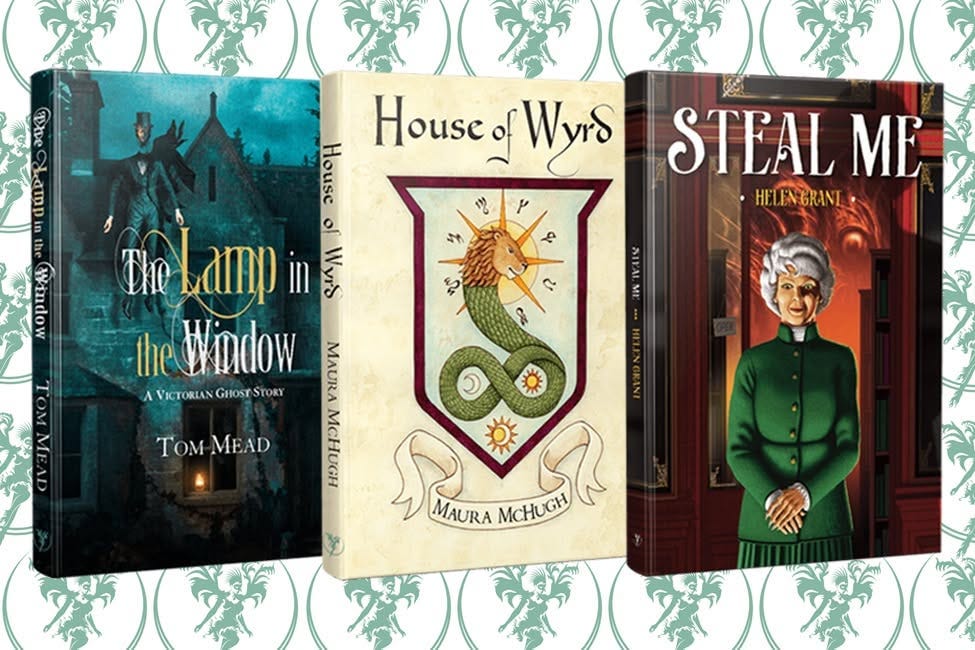
Earlier today I spotted a notice from PSP that its batch of summer 2026 novellas from Absinthe Books (they are always published in threes) have been shipped to the printers.
That’s a fine trio of handsome books!
Thanks to everyone who has pre-ordered the hardback edition of House of Wyrd with its beautiful cover and endpapers by Lisa Laughy (and it’s not too late to get your copies). You can watch the video of my conversation with Lisa about our collaboration at this link.
Fingers crossed your books will be in the post later this month.
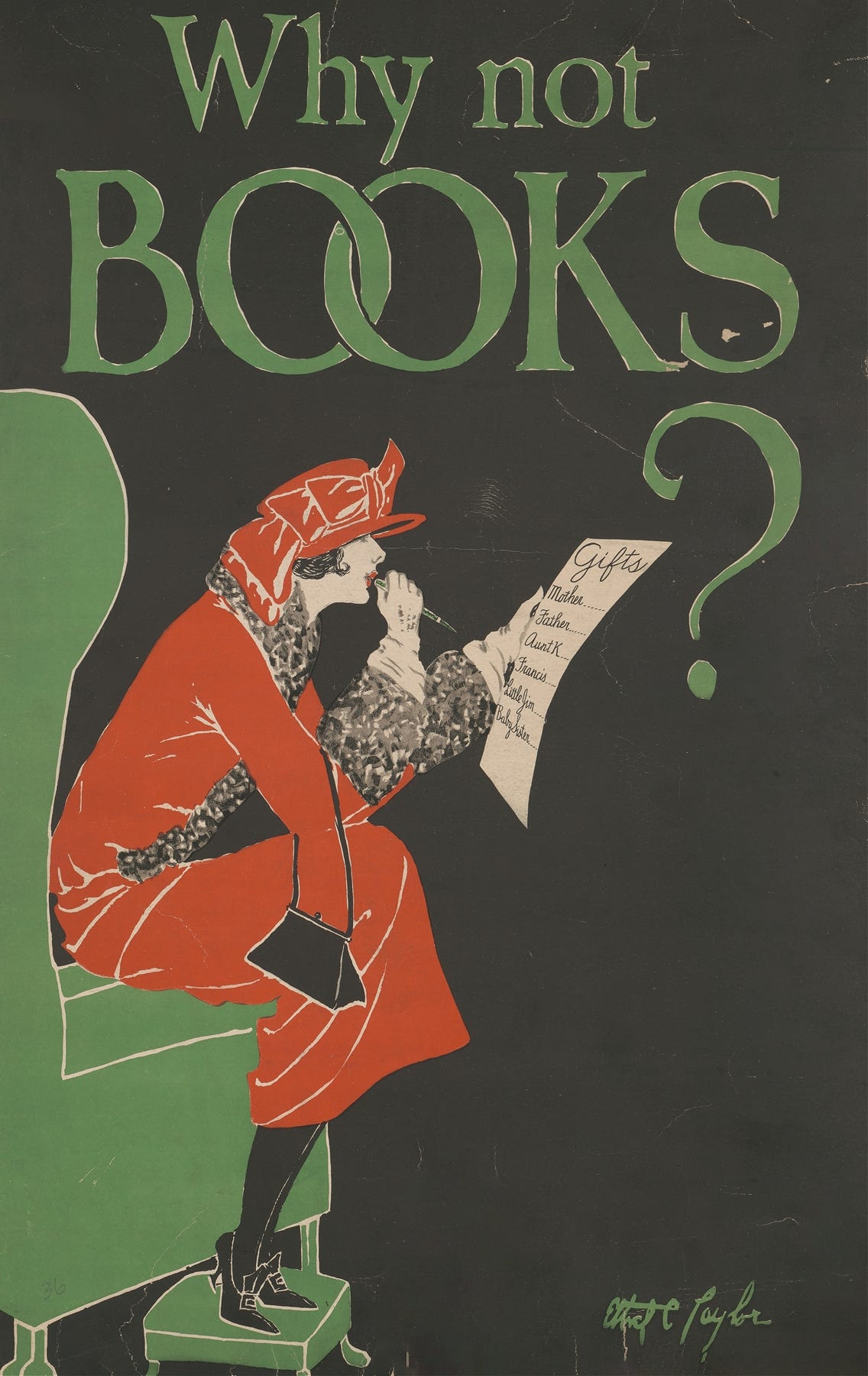
I’ve mentioned before that I enjoy watching sports when the competition is at a high level, so I’ve been tuning into a few of the most recent World Cup matches.
The England versus Mexico confrontation was a fast-paced, exciting match, with both teams bursting with a desire to win. It was a game of hope and despair as the teams pushed themselves hard to gain entry to the next round of matches — but there can be only one!
That super match seemed like a simple affair compared to the Argentina v Egypt game that sidelined me this afternoon — what a gripping, dramatic and brilliant game of footie, with two teams playing with gusto and drive. Egypt played with such finesse and heart, and managed to light a rocket under Argentina in the second half.
I hope I’ve not spoiling this for anyone, but the sight of Lionel Messi and his teammates celebrating after their extraordinary victory was truly beautiful. Tears, dancing, and Messi being joyously tossed into the air by his companions, while behind him a poster of legendary Argentinian football player Maradona flapped in the stands. It had the hallmarks of a iconic photograph. This elation only comes after a hard trial, and it is tough to watch by the heartbroken losing side.
Yet, ahead of Argentina is another match and another nail-biting test of skill and endurance. The win today was everything; the next game awaits.
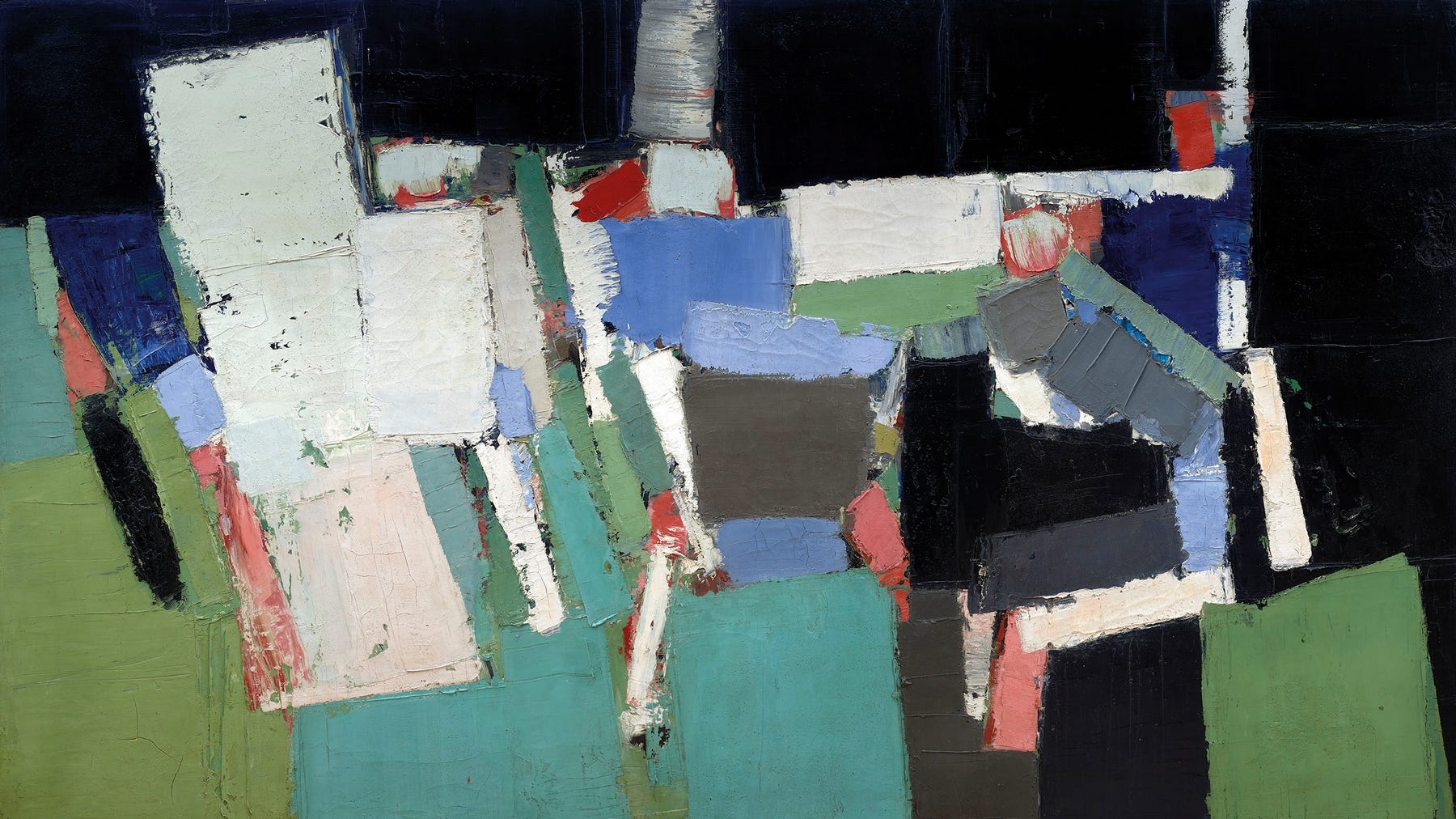
The above canvas by abstract painter Nicolas De Staël (1914 – 1955) struck me strongly today, because capturing the spirit of a game and people in motion is a tough challenge for any artist, but to convey its essence through its parts is another task entirely.
The painting was inspired by an international match in the Paris football stadium that de Staël attended on Thursday, March 27, 1952, which was played at night for the first time under sparkling artificial light.
Although the gameplay gained mediocre reviews, the spectacle galvanised the artist, and he painted a series of images, with ‘Parc des Princes’ being his largest (200 × 350 cm). To accommodate his vision, the artist cut out a 50 cm piece of sheet metal, and along with his regular spatulas, laid out the layers of paint on the canvas.
“The painter, on that same night that had witnessed this dazzling match, could not bring himself to go to bed,” wrote Anne de Staël, the artist's daughter. “He wanted to keep this flame alive, to rekindle its brilliance so that it would endure. He worked on the border of reality and imagination, revealing depths beneath an apparent surface. He immediately sketched a few drawings to capture a beginning, a movement.”
When the painting was displayed it stirred up antagonistic responses from his fellow abstract artists who felt he was betraying the movement in favour of a more figurative approach.
This might come as a surprise to anyone viewing the painting today! It’s also an example of the dangers of being boxed into the dictates of an art manifesto. I’m constantly surprised at how easily colleagues, critics or fans can heckle an artist for following their vision when it breaks with their expectations.
De Staël followed his intense inspiration to produce the painting, and that was his only guiding force. When the debate broke out, he noted:
“I do not set abstract painting against figurative painting. A painting should be at once abstract and figurative: abstract as a wall, figurative as the representation of a space.”
This kind of painting and critique is not going to be to the tastes of many people, but a football match can be equally as tiresome to others.
When our heart is stirred by the artistry of our fellow human beings it can reinvigorate our spirit. It could be the graceful arc of a superbly placed goal by an athlete at the top of their form, or rectangles of creamy white, viridian and pink assembled on a canvas to evoke that moment of rare achievement.
The human desire to push through limits into ineffable spaces can produce wondrous results.
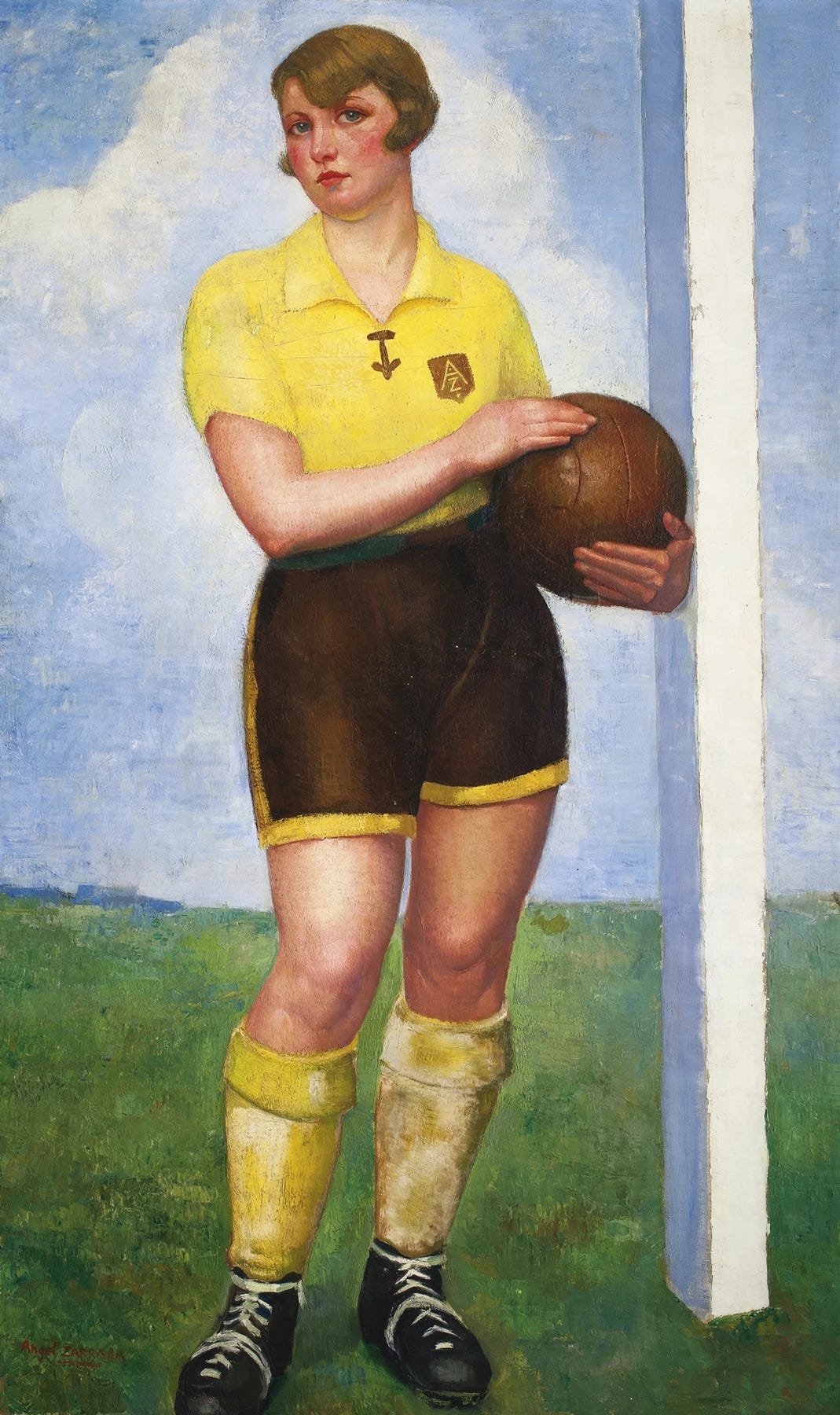
I must add a small note about this terrific painting by Mexican artist, Ángel Zárraga (1886-1946). Zárraga’s first wife, Jeannette Ivanof, played in the French women's football league in 1926 run by the Fédération des Sociétés Féminines Sportives de France (FSFSF), led by women’s sport advocate, Alice Milliat.
If you want to read about earliest days of women’s football, I recommend the four-part series of essays by Helge Faller: The Forgotten Pioneers: International Women’s Football in the Interwar Period (which includes information about Irish women players and teams).
Women’s football has been around since the beginning of the sport, but most countries began introducing bans on women’s football in the 1920s and 1930s by excluding them from the football pitches. This effectively squashed the sport until its revival in the 1970s, and it is only in the past two decades that attendance has returned to its previous numbers.1
The Irish women’s football team has been playing very well recently, and have a chance at gaining a spot in the 2027 FIFA Women’s World Cup.
Most people don’t realise how many people watched women’s football before it was banned from pitches. For instance, on Boxing Day 1920, more than 53,000 people turned up at Goodison Park in Liverpool to watch Dick, Kerr Ladies play St Helens in a charity match for wounded and unemployed ex-servicemen. The popularity of the sport was the problem.