

catalogue
becoming part of the record for future evocation

Dear word explorer,
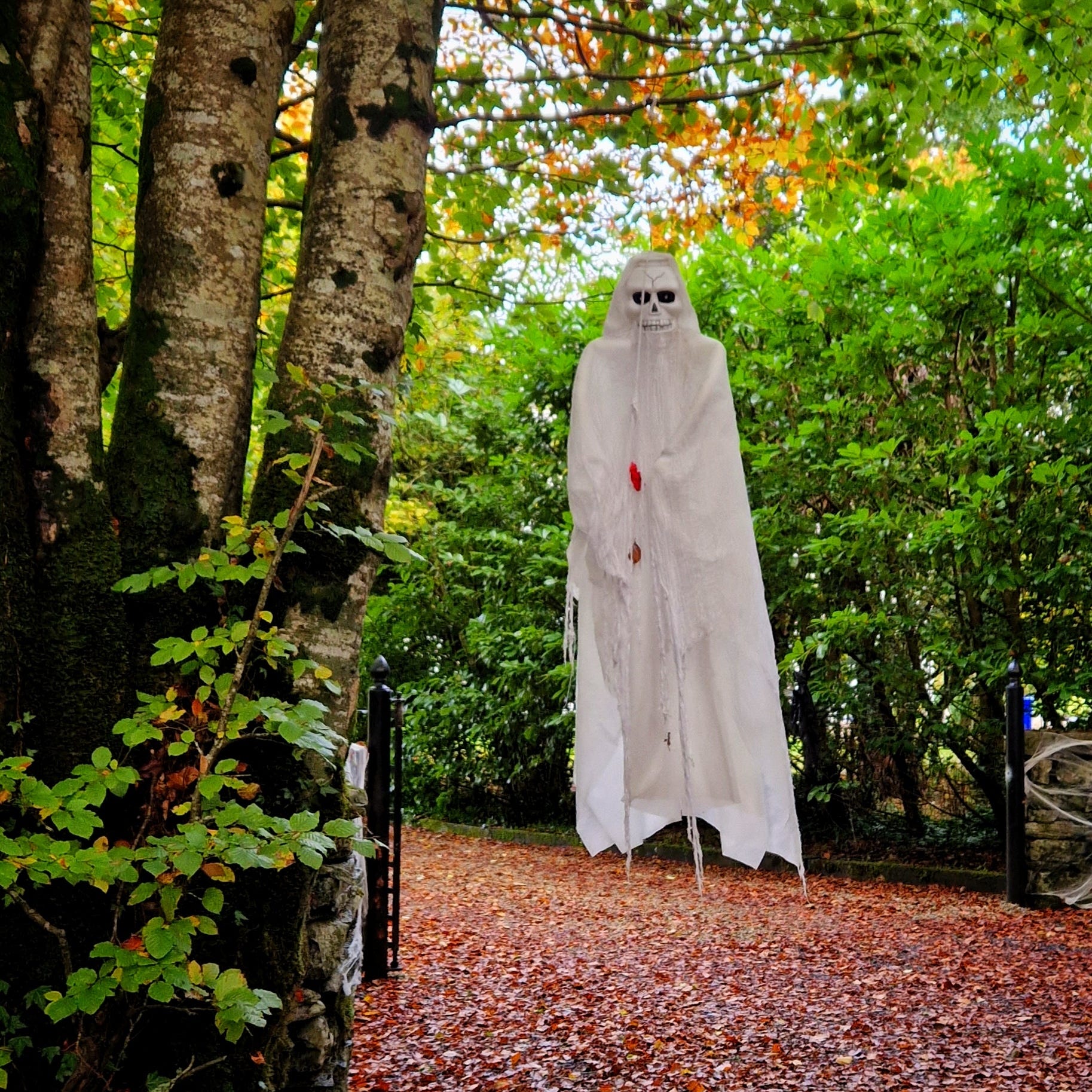
Spooky October is upon us, and my autumnal-loving soul is already swooning over dessicated leaf-fall swirling in eddies as cars sweep down laneways arched with trees glowing with ochre and umber hues.
Soon, there will be ghosts, goblins and witches festooning the neighbourhood driveways. Hurrah for Halloween, I say!
I had to resolve a bureaucratic mixup today, which was sorted out because I could make a face-to-face appointment with an actual person in a small town administrative office. A minor data anomaly was pointed out to me recently (in a slightly alarmist email), which raised a query about my status as a resident citizen in Ireland: I’m a dual national but I was born in America.
The matter highlighted the importance of exact documentation in the modern age, and how every detail is scrutinised in an unprecedented fashion. If little personal facts seem incongruous then you don’t get much leeway. You have to account for them with supporting paperwork.
At the meeting today I was able to communicate the issue clearly and I had the relevant documents, so it was handled efficiently and amicably. It resulted in a bit of time and more online registration, but hopefully that will be the end of it.
It reminds me of the 1960s TV series, The Prisoner, in which a former British intelligence agent known only as Number Six (Patrick McGoohan), abruptly quits his government job, only to be abducted and confined to a weird prison town populated with odd characters. In the first episode, ‘Arrival’, he declares: “I will not be pushed, filed, stamped, indexed, briefed, debriefed, or numbered! My life is my own.”
These days we are pleased when the records are reconciled and we are accepted by the Village…
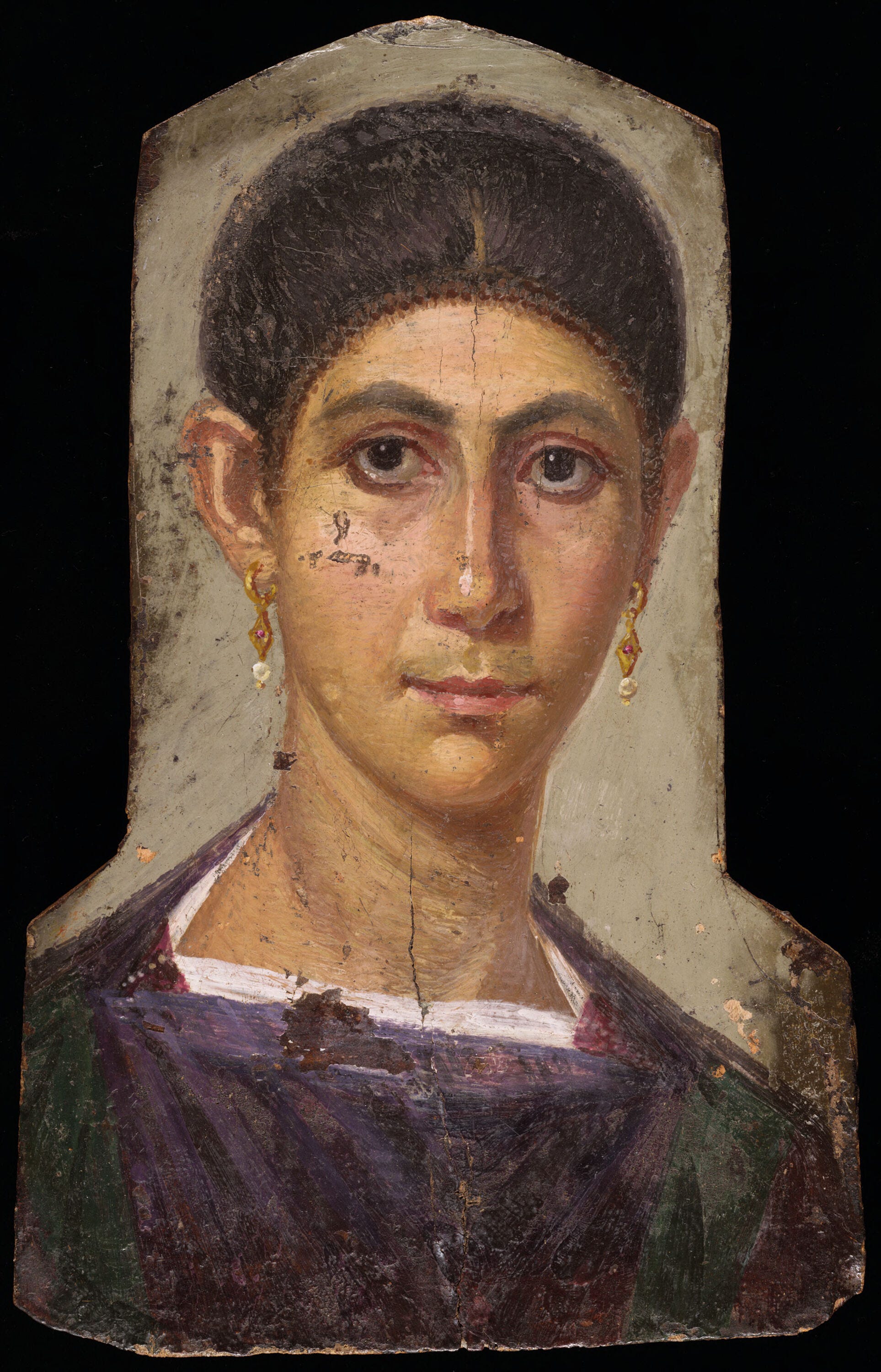
Sometimes I end down strange paths when I’m assembling a newsletter, and through a combination of searches I arrived at the subject of Egyptian funerary portraits, commonly known as Fayum mummy portraits.
These vibrant and lifelike paintings of deceased people were affixed to the linen wrapping of a mummy or the lid of the sarcophagus, and became popular from the late 1st century BCE to the mid-3rd century CE, when Egypt was a Roman province.
Most of the people in the pictures were wealthy Greco-Egyptians who were adding their flourish to the existing funerary rites of Egypt. Cultural fusion or colonial imperialism?
The results are very striking.
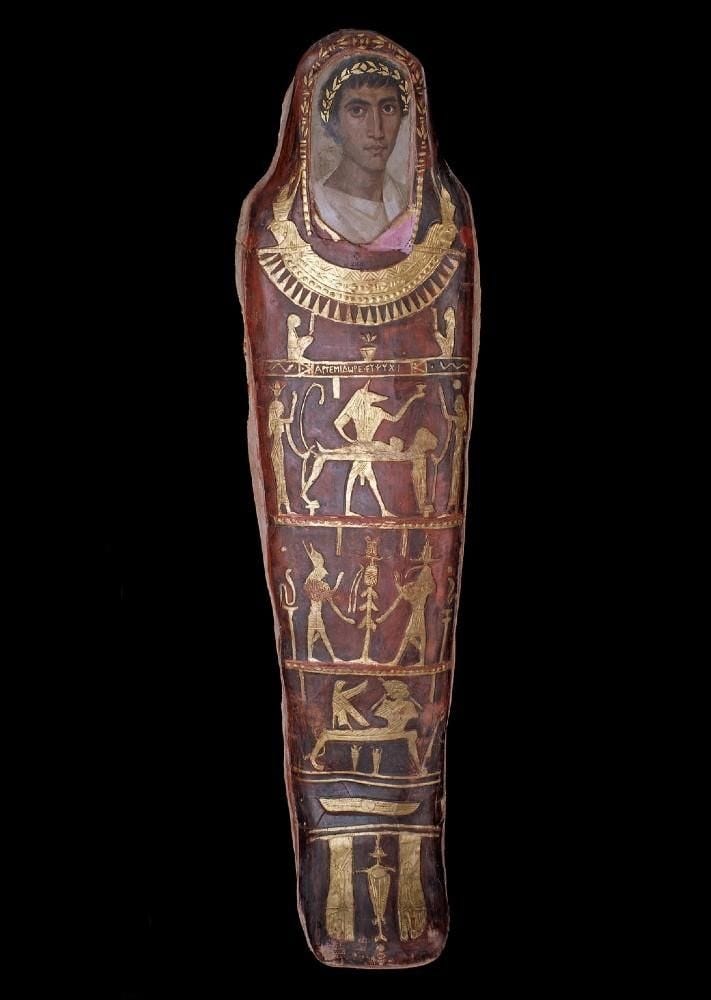
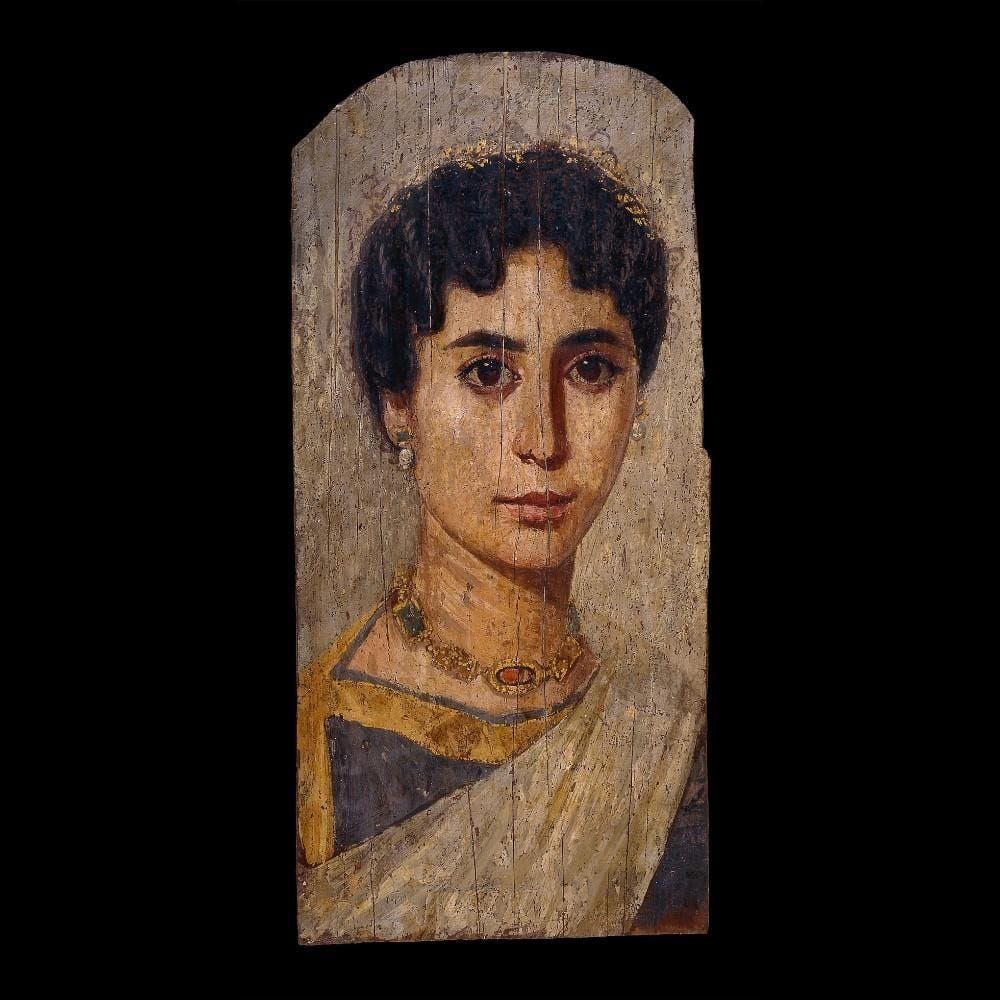
Fayum portraits depict the head and upper body of the deceased who is facing forward, usually wearing Roman clothing and jewellery. They are so named because they were most popular in the Faiyum Basin, particularly in Hawara and Antinoöpolis, a city founded by Roman Emperor Hadrian on 30 October 130 CE (I spy a Halloween connection) in memory of his companion Antinoüs, who had drowned in the Nile earlier that year close to that location.
I love the beautiful characterisation and deft style of the artworks, but it’s poignant to notice the youth of many of these dead people. It would be marvellous to possess a similar memento (but not as a token of my death)!
Thousands of years have passed and yet these people seem so relatable. You could imagine spotting them at a fancy dinner party.
About 900–1,000 funerary portraits have survived in various museums around the world, with most of them separated from their original mummies. The portraits became easy loot destined for global antiquities markets, but their corresponding bodies were discarded and rarely tracked.
The portraits are indexed and displayed online, but many of the subjects are unnamed. Their images exist in a virtual realm, and are only viewed in a remote, ghostly fashion by a few interested people today.
I doubt the elegant lady above could conceive that one day I would admire her funerary painting from my home in the West of Ireland on a wet night.
In a thousand years time, what spectre of mine will be conjured by our successors?
Now that I have been properly catalogued, maybe my avatar will be projected by future robot hybrids as they colonise a nearby exoplanet, needing an ancient form to entertain them as they record each new surprising species.
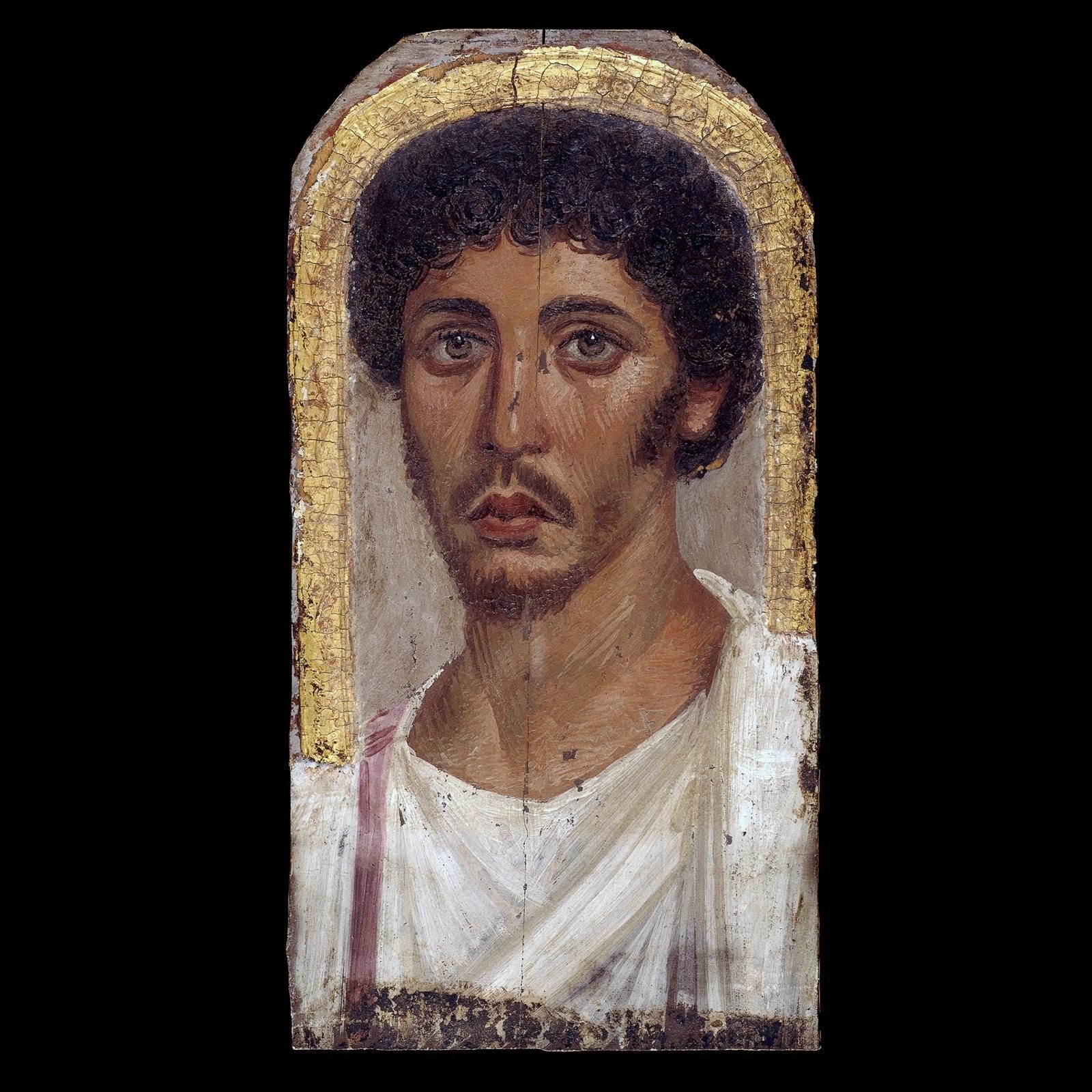
Love seeing faces from the past! They are us.
Love these portraits! It gives me quite a thrill to look on these long-gone faces