

Siesta
can you take a break in the heat, can you allow others to do so?

Dear word explorer,
Thank you for the kind comments about my forthcoming novella, House of Wyrd, from PS Publishing, and especially your praise for the striking cover artwork by Lisa Laughy. Cheers to those of you who have already ordered the hardcopy edition!

It is tropical in Ireland at the moment. To step outside in the afternoon is to feel the instant scald of the sun.
Everywhere, flowers erupt in colourful songs of praise at summer’s arrival. Butterflies flicker through the puzzle shapes of tree-shade and bees dance on petals with their fat pollen-socks. Birds sing from their sheltered perches. Reduced rivers burble greetings to panting dogs, who slip leads to splash in the cooling water.
Optimism soars. Smiles beam on flushed faces as people greet strangers with solar-powered enthusiasm. The warbled call of ice cream trucks echoes through street-valleys, summoning clamouring children and their supervising adults, jangling coins and cards. People plop down on park lawns to lick cones, eat sandwiches and sip drinks— the best of them take away their litter…
Drowsiness creeps up during the post-lunch swelter.
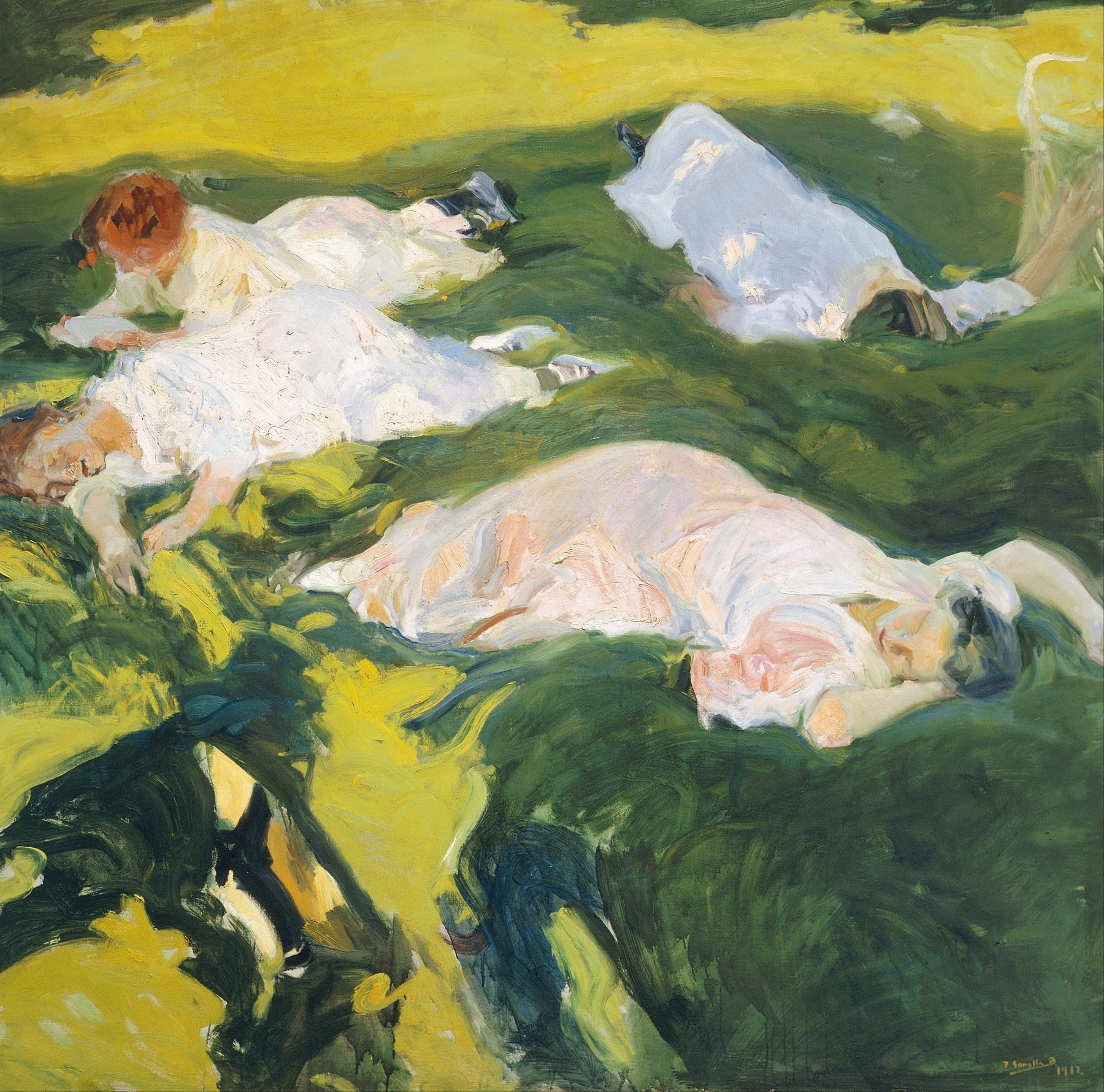
Those who experience warm climates understand that the only way to survive is to live with a gap in the centre of the day where you retreat to canopied spaces and reduce activity. They embrace fresh mornings and balmy evenings. Yet, the rigid disciplinarians controlling modern lifestyles disdain siestas or piecemeal days and insist people stick to standard hours from season to season. Not everyone benefits from air-conditioned workplaces or homes designed to cope with blistering heat.
No doubt, if you wish to obtain services in the middle of the day a retreat is an irritant, but less so when you bend to the situation rather than rail at its awkwardness for your schedule. We chain other people to their desks and registers because we insist on constant supply and no inconvenience. We expect service with a smile from those who are operating in extra-hot kitchens, stifling offices, or those occupied outside.
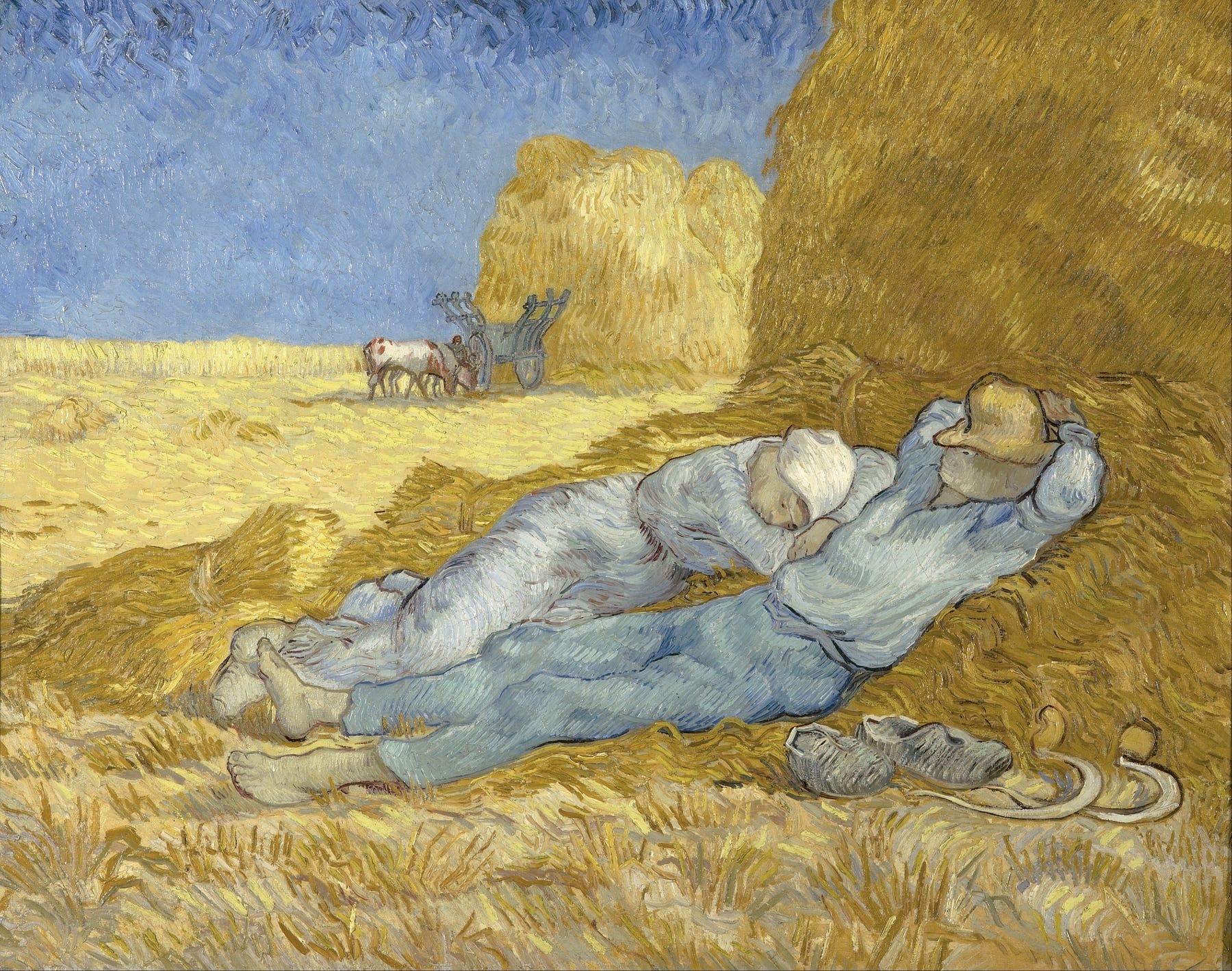
Summer holidays must be optimised with hourly highlights so we can record our fun and prove it happened. What memories can we photograph if they consist of a quiet snooze by a haystack? Van Gogh painted it; an admiration of the glory of a nap in between hard work.
To stop for the scorch is sensible, but only if it doesn’t impact what I plan to do. In a me-centric world, it’s hard to loosen ego’s reins and soften the insistent schedule in our brains.
Anyone who is in a rush or stressed feel the penalty of extra heat. This is weather that demands we lighten the load, but a slow-down is difficult for people in demanding careers or responsible for the care of others, especially those locked into travel by cars or public transport that snarl through busy roads bent by heat mirages. Our good will melts incrementally with every rising degree.
Tempers may soar with the temperatures.
And I arrive at the interesting nexus of nouns and verbs that originate from temper: to temper, a temper, temperament, temperature, temperance, tempo…
It is likely a development from the Old English temprian “to mix with, moderate,” which originates from the Latin temperāre "to exercise moderation, restrain oneself, moderate,” but also there is a sense of the Latin tempor-, tempus “time, period of time, season.”
So to temper a spice in the pan or a blade on an anvil is to introduce heat to help modify or change its state.1 A (bad) temper is to lose balance and restraint. A temperament is a mixture of elements that make up the personality, and those qualities can go askew.2 Temperature is a measure of heat based on various scales. Temperance requires moderation, to restrict a habit. Tempo is a beat, the pace of music. It is about having a rhythm, and understanding how to play within that speed.
The composition suggests the pace.
Did you know that there is an opposite instinct to hibernation, known as aestivation (‘summer sleep)? It’s a dormancy in animals that is triggered by higher temperatures and dry conditions.
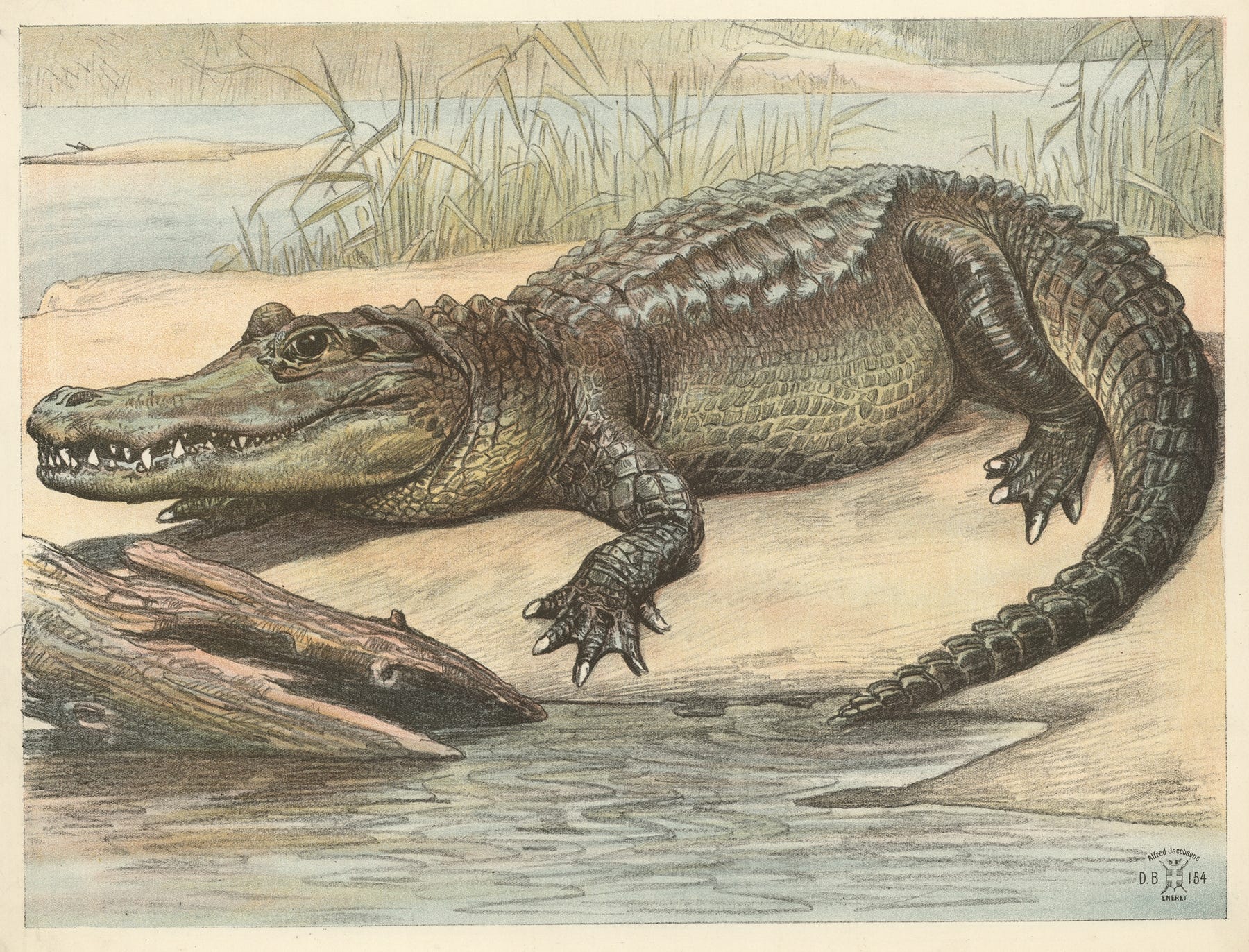
For instance, in a drought crocodiles burrow into the mud of riverbeds with just eyes and nostrils exposed so they can see and breathe. Their heart beats three times a minute and they only have to breathe once every five minutes. In this dormant state they can survive until the rainy season returns. Clearly a working tactic for an animal that appeared roughly 83 million years ago and continues to survive.
Another weird fact about crocs is that they can sleep with one eye open because, unlike humans, their brain allows for ‘unihemispheric sleep’ — an ability shared by other aquatic creatures such as dolphins and orcas as well as birds.3 This gives crocodiles a quick advantage if attacked by a predator, or if an opportunistic snack wanders too close…
The summer slumber of a croc does not mean they are vulnerable. They have hunkered into shelter, listening to an ancient instinct to endure until the next cycle.
They know when to rest, and when to snap awake and charge.
I find it interesting that we use to term ‘to season’ a spice, a frying pan, or piece of wood in a similar fashion as ‘temper’. Technically it comes from the Old French saisonner ‘to ripen’, but that is the result of the sun’s heat upon a crop. We are back to the idea of allowing character to develop over time with exposure to activating elements.
Centuries ago there was a theory about personalities, which believed there were four cardinal temperaments: sanguine, choleric, melancholic, and phlegmatic, which was based on the mixture of ‘four humours’ (blood, phlegm, yellow bile and black bile). Early Western medicine believed if these elements were wildly out of balance it would introduce disease or affliction to the person. Many of these terms remain in our language even if we don’t attribute sickness now to being ‘ill-humoured’.
It’s thought that unihemispheric sleep allows migrating birds to get some rest while they fly at the same time. Although, this is a difficult hypothesis to test.