

Earthshine
the Earth's glow is more magical when we get enough perspective

Dear word explorer,
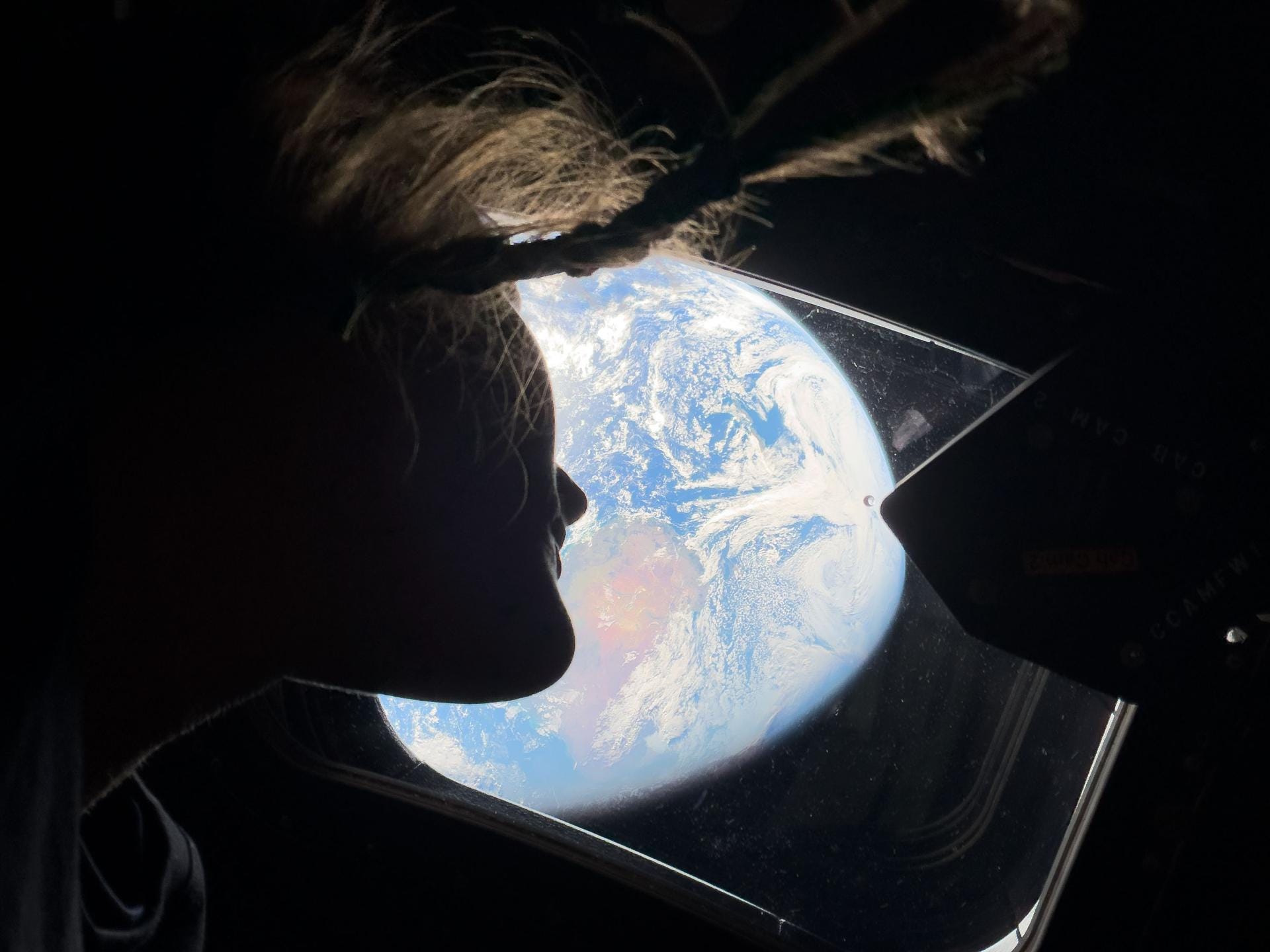
Wow, check out this fabulous picture of Earth taken by Commander Reid Wiseman of NASA’s Artemis II crew from the Orion spacecraft’s window on the 2nd of April 2026!
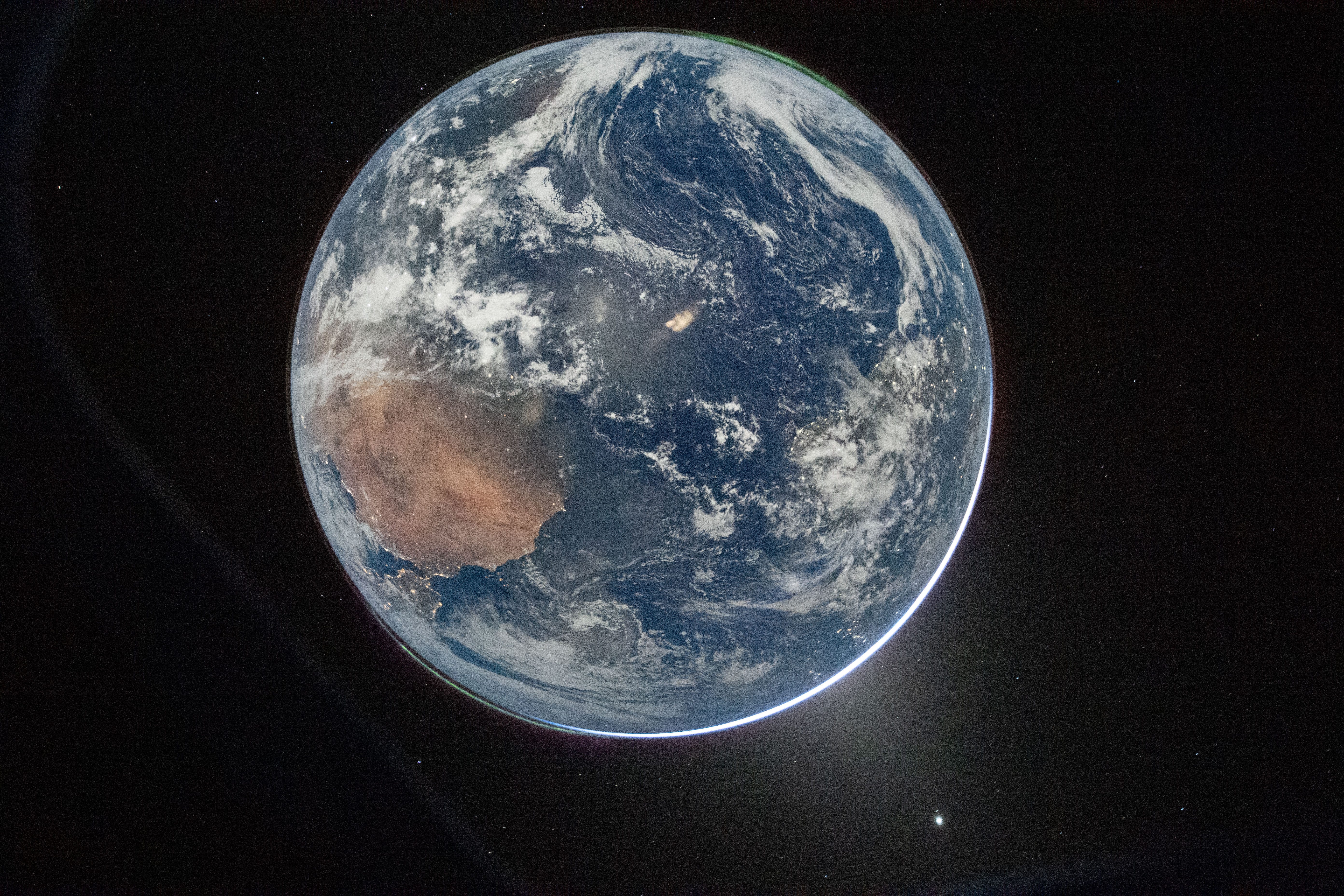
I watched the mission launch last week, and I was struck by the immense effort it takes to organise a mission of this complexity, and the sheer power required to escape Earth’s gravity. The last time humans flew outside Earth’s orbit was during NASA's Apollo 17 mission in 1972! During that voyage Astronauts Eugene Cernan and Harrison Schmitt landed on the Moon, and completed their final moonwalk on the 14th of December. I doubt they thought it would take over fifty years for it to happen again.1
The Artemis II Space Launch System (SLS) was a super heavy-lift launch vehicle almost 100 metres tall, which generated the 3.9 million kilograms thrust necessary to heave the Orion spacecraft (named Integrity by the astronauts) with its four-person crew, cargo and supplies into low orbit.
Here’s a simple infographic from NASA detailing the milestones for the mission.
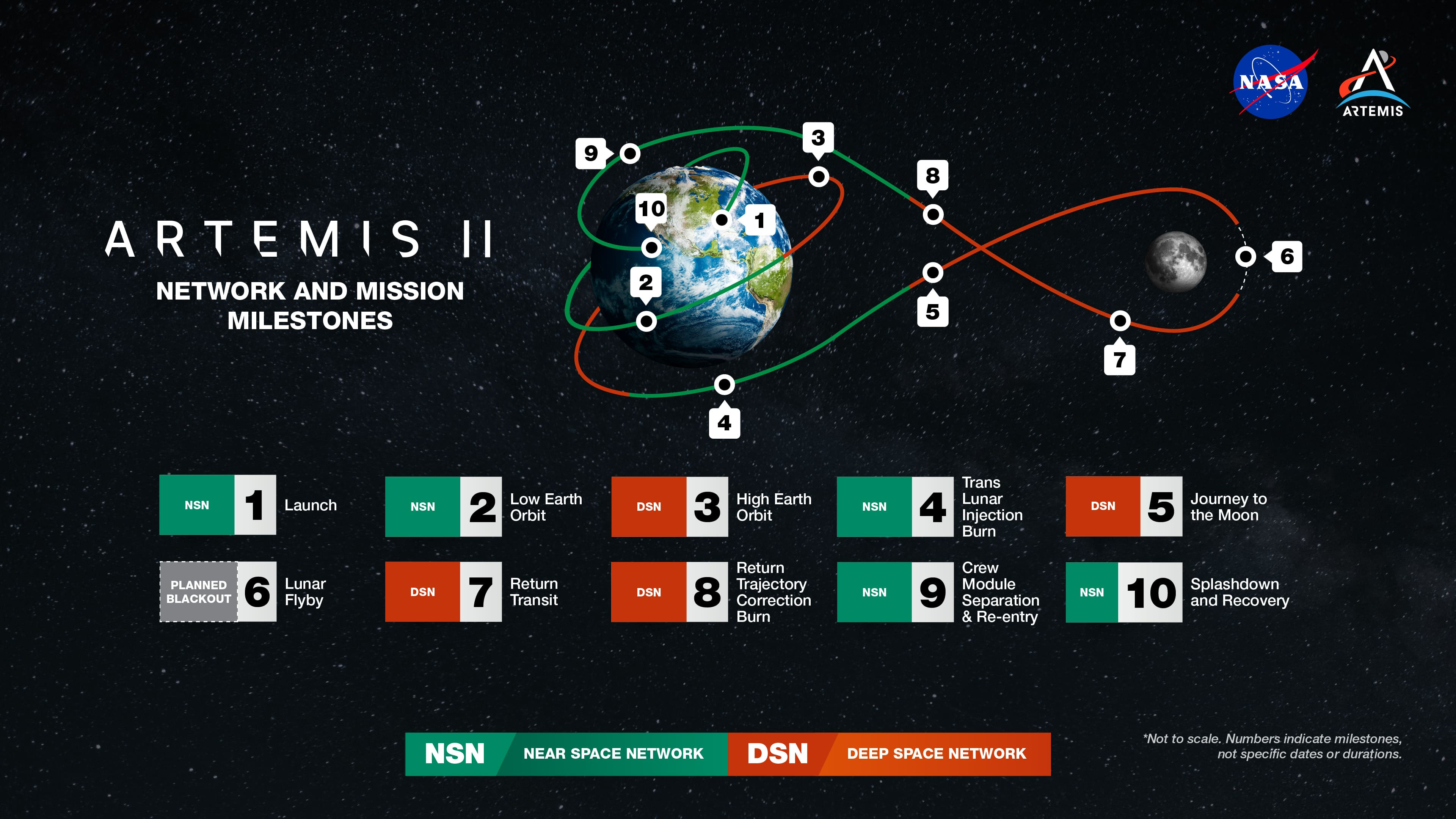
The critical moment came 36 hours into the mission, when Orion fired its main engine for five minutes and fifty-five seconds (the translunar injection burn) which set the spacecraft on its loop around the Moon with no extra manoeuvres required. It was executed as expected, and since then the astronauts have been busy conducting scientific research, observing and taking great photographs of the Earth and the Moon.
Right now Orion has successfully completed its Lunar Flyby — where the spacecraft passed by the dark side of the moon, normally invisible to us — and endured a forty-minute phase of radio silence.
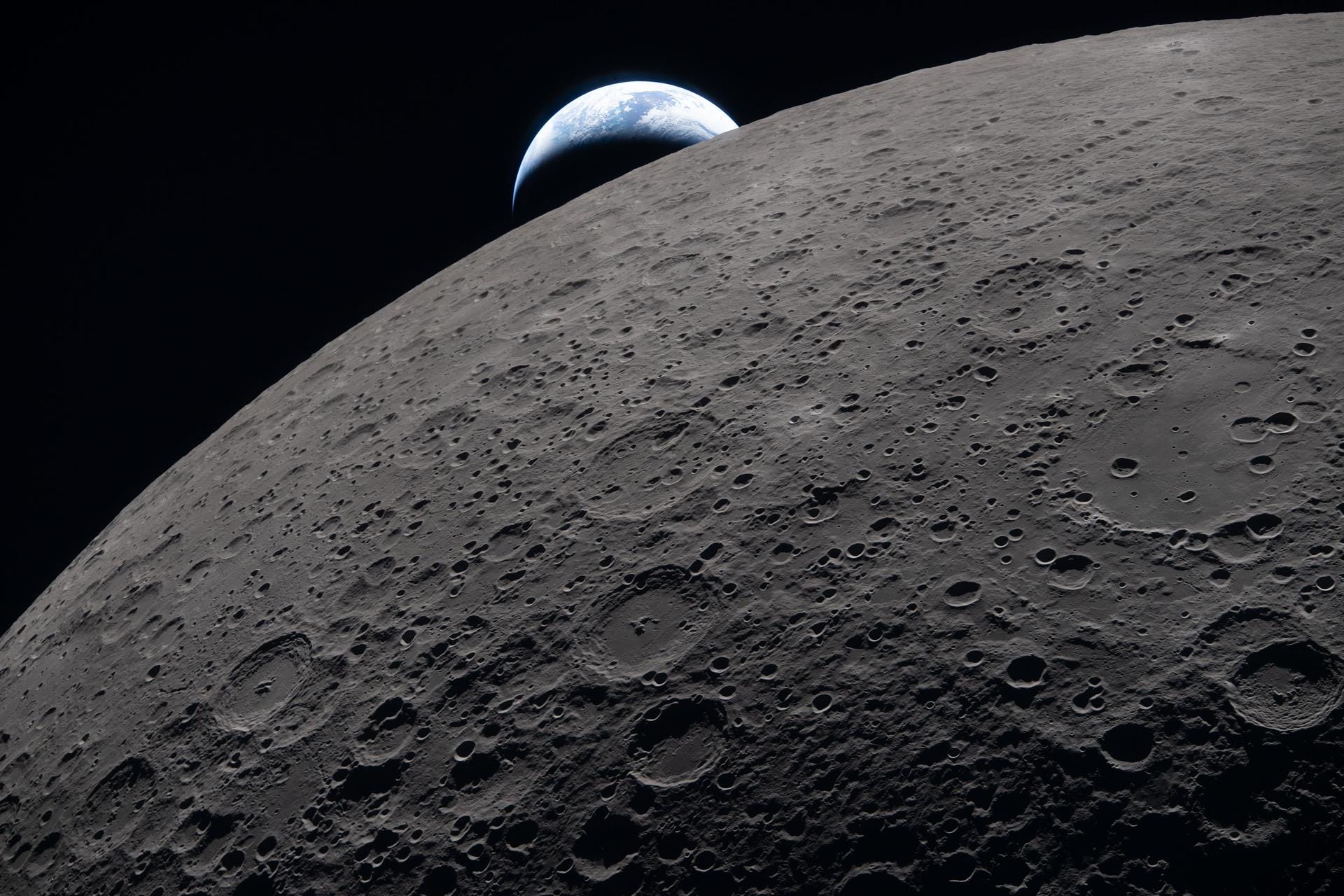
During this historic flyby, NASA astronauts Reid Wiseman, Victor Glover, and Christina Koch, and CSA (Canadian Space Agency) astronaut Jeremy Hansen set the record for the farthest distance from Earth travelled in a craft staffed by humans. They hit the 406,771 km mark, which is 6,616 km miles farther than the Apollo 13 mission in 1970.
It’s not been a perfect trip, after all the four astronauts are living in a space that’s 5m wide and 3m high, so it’s cramped (being able to float probably helps). Plus they’ve had toilet issues: a wastewater vent line clogged, and required ad hoc plumbing.
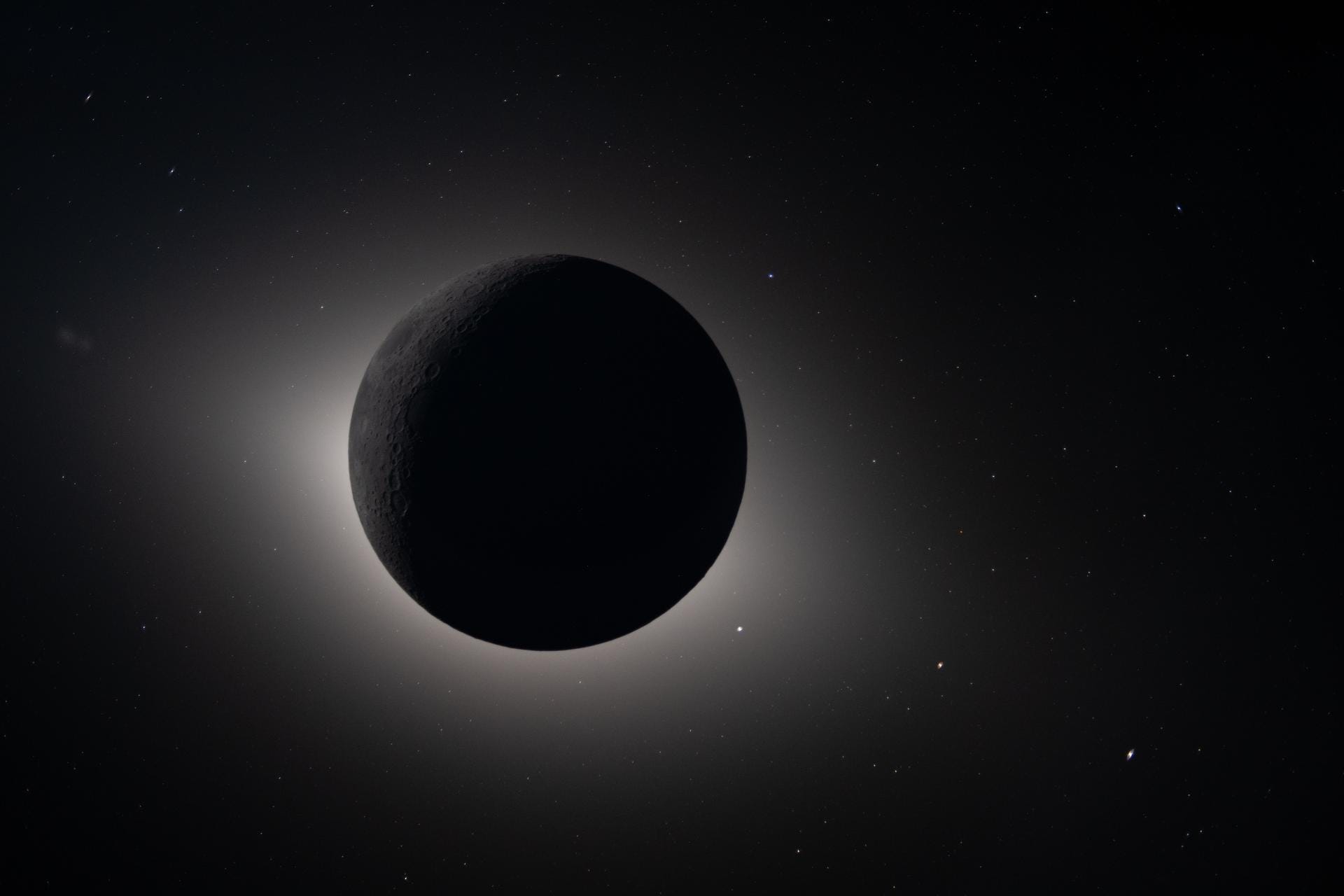
Captured by the Artemis II crew during their lunar flyby on April 6, 2026, this image shows the Moon fully eclipsing the Sun. From the crew’s perspective, the Moon appears large enough to completely block the Sun, creating nearly 54 minutes of totality and extending the view far beyond what is possible from Earth. The corona forms a glowing halo around the dark lunar disk, revealing details of the Sun’s outer atmosphere typically hidden by its brightness. Also visible are stars, typically too faint to see when imaging the Moon, but with the Moon in darkness stars are readily imaged. This unique vantage point provides both a striking visual and a valuable opportunity for astronauts to document and describe the corona during humanity’s return to deep space. The faint glow of the nearside of the Moon is visible in this image, having been illuminated by light reflected off the Earth.2
This glow is referred to as Earthshine, and during the eclipse totality the crew witnessed at least five meteorite impacts on the moon’s surface — a rare display to welcome the fleeting visitors. Since the moon has no atmosphere, the objects blast into the surface unhindered, hence its deeply pockmarked surface.
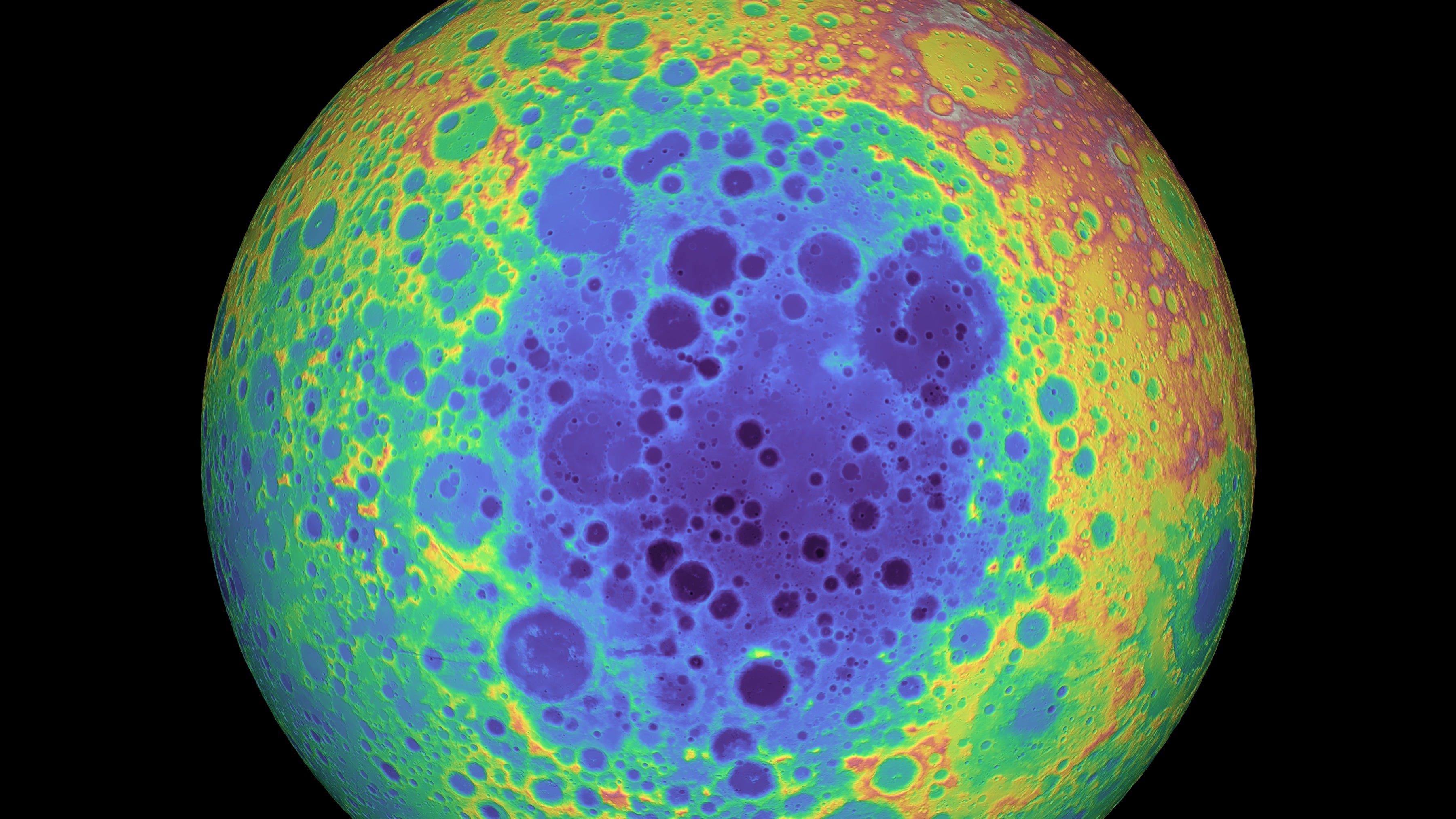
The largest documented impact crater in the solar system is located the far side of the moon. Known as the South Pole–Aitken basin, it’s roughly 2,500 km wide. It’s estimated to have occurred 4 billion years ago during an period referred to as the Late Heavy Bombardment era,
… which posits that a sudden change in the orbits of the giant planets ― Jupiter, Saturn, Uranus, and Neptune ― threw the asteroid belt into disarray and sent those leftover pieces of the solar system’s formation crashing into the inner planets.3
The Artemis II crew are now on their Return Transit, termed a ‘free return’, as they’re relying on Earth’s natural gravity to pull them home. They’ll complete three small trajectory correction burns before their re-entry and splashdown in the Pacific Ocean.
I’ll spare you the details of the potential dangers facing the astronauts in this last section, but instead I invite you to imagine them at their congratulatory press conference next week!
The Artemis Crew has expressed their gratitude for their extensive support teams, and the pioneering work of the previous generations of astronauts to which they are indebted. They’ve also exhibited a psychological readjustment common among astronauts who have witnessed a distant Earth against the black expanse of space: awe and a renewed appreciation for the beauty of our home planet.
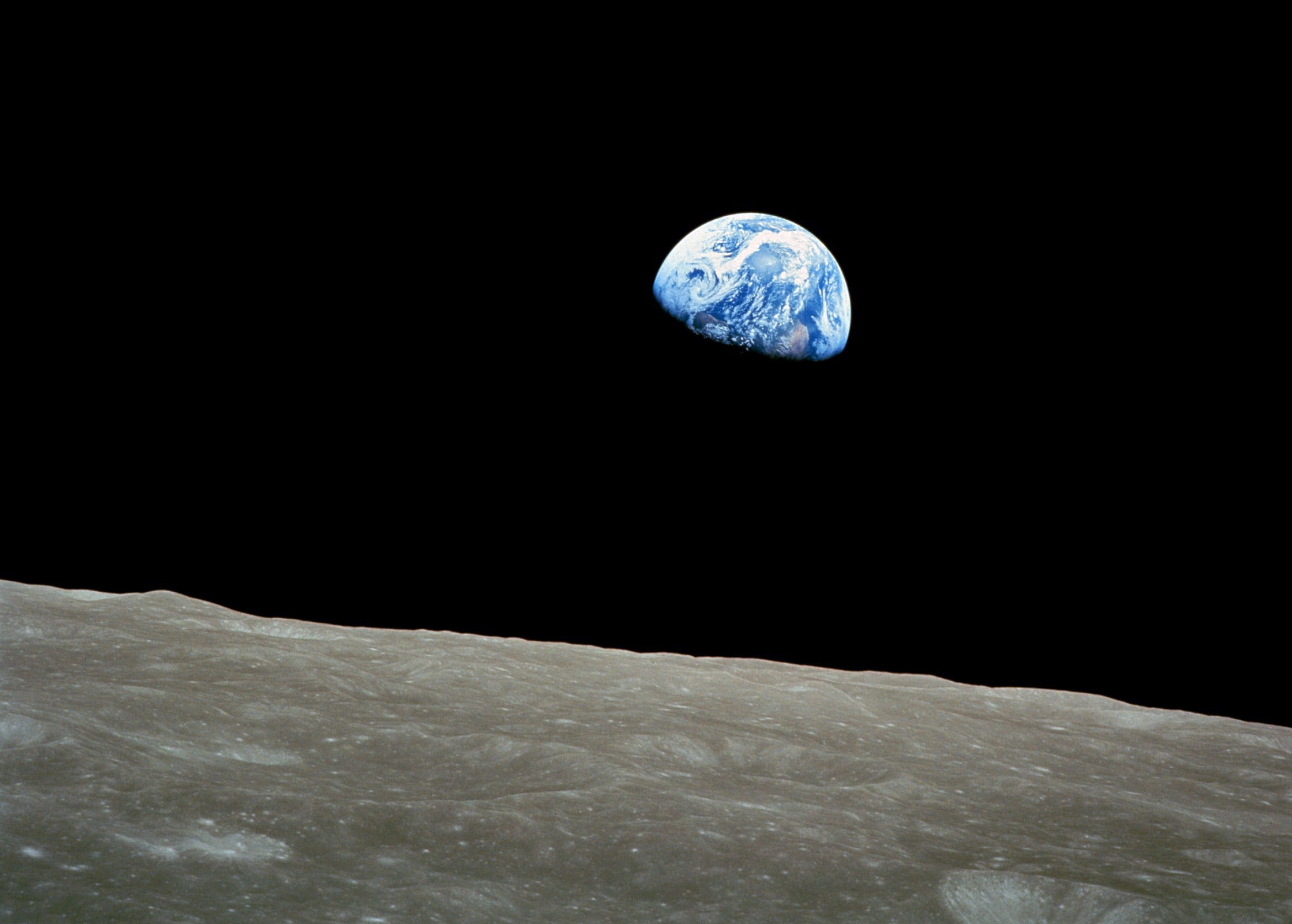
This ‘Overview Effect’ resolved into mainstream human consciousness in a visual way when Apollo 8 mission astronaut Bill Anders snapped this iconic picture of Earth above the lunar surface during the first crewed mission to circumnavigate the Moon in December 1968 (with Frank Borman and Jim Lovell aboard).
Anders recalled:
When I looked up and saw the Earth coming up on this very stark, beat up moon horizon, an Earth that was the only color that we could see, a very fragile looking Earth, a very delicate looking Earth, I was immediately almost overcome with the thought, here we came all this way to the moon, and yet the most significant thing we're seeing is our own home planet, the Earth.4
Yet, the idea had already been conceived as an important milestone for humanity. English astronomer Fred Hoyle had noted in his 1950 book, The Nature of the Universe: “Once a photograph of the Earth, taken from outside, is available – once the sheer isolation of the Earth becomes known — a new idea as powerful as any in history will be let loose.”
Taking photographs hadn’t been a priority for NASA when it was busy figuring out how to bring people to the moon and back safely, but during all the headlines and conversation about the race to the moon this lack was noticed.
In February 1966, musician Stewart Brand had an insight while tripping on LSD after a Buckminster Fuller lecture, and set about making buttons with the question: “Why haven’t we seen a photograph of the whole Earth yet?
Brand had several hundred of the buttons manufactured and he put them on a sandwich board and began to sell them at Sather Gate of the University of California at Berkeley. He sent them to NASA administrators, members of Congress, Soviet scientists and diplomats, Buckminster Fuller, Marshall McLuhan and UN officials. He eventually brought his sandwich board to other college campuses, selling his buttons at Stanford, Harvard, Columbia and MIT.5
Often, it takes a trip away to appreciate what we have, or to realise what we need.
On 14 February 1990 NASA’s Voyager 1 was 6.4 billion km from Earth, on the edge of our solar system, and it turned its camera to take a last photograph of Earth — it was a tiny point of light.
In Carl Sagan’s 1994 book, Pale Blue Dot, he says:
Look again at that dot. That’s here. That’s home. That’s us. On it everyone you love, everyone you know, everyone you ever heard of, every human being who ever was, lived out their lives. The aggregate of our joy and suffering, thousands of confident religions, ideologies, and economic doctrines, every hunter and forager, every hero and coward, every creator and destroyer of civilization, every king and peasant, every young couple in love, every mother and father, hopeful child, inventor and explorer, every teacher of morals, every corrupt politician, every “superstar,” every “supreme leader,” every saint and sinner in the history of our species lived there--on a mote of dust suspended in a sunbeam.
The Earth is a very small stage in a vast cosmic arena. Think of the rivers of blood spilled by all those generals and emperors so that, in glory and triumph, they could become the momentary masters of a fraction of a dot. Think of the endless cruelties visited by the inhabitants of one corner of this pixel on the scarcely distinguishable inhabitants of some other corner, how frequent their misunderstandings, how eager they are to kill one another, how fervent their hatreds.
Our posturings, our imagined self-importance, the delusion that we have some privileged position in the Universe, are challenged by this point of pale light. Our planet is a lonely speck in the great enveloping cosmic dark. In our obscurity, in all this vastness, there is no hint that help will come from elsewhere to save us from ourselves.
The Earth is the only world known so far to harbor life. There is nowhere else, at least in the near future, to which our species could migrate. Visit, yes. Settle, not yet. Like it or not, for the moment the Earth is where we make our stand.
It has been said that astronomy is a humbling and character-building experience. There is perhaps no better demonstration of the folly of human conceits than this distant image of our tiny world. To me, it underscores our responsibility to deal more kindly with one another, and to preserve and cherish the pale blue dot, the only home we’ve ever known.
NASA has announced an ambitious ‘Ignition’ strategy, which will invest $30 Billion over the next decade in regular missions to the Moon, with another Moon landing scheduled for 2028, and the construction of a Moon Base.
‘Artemis II in Eclipse’ on NASA’s web site.
‘To the Moon’, PBS.
‘Whole Earth or No Earth’, by Robert Jacobs.
Incredible photographs! It's awe-inspiring, really.
Those images are absolutely stunning. The best thing about digital photography is that allows for immediate results and the opportunity for a do-over if needed. With all of those great pictures from Apollo, one has to wonder the ratio of good to bad shots. A cramped, fast-moving spacecraft and the Moon itself are not places that would be considered photo-friendly!