

fire away
publishing news, lights in the sky, and tending sacred flames

Dear word explorer,
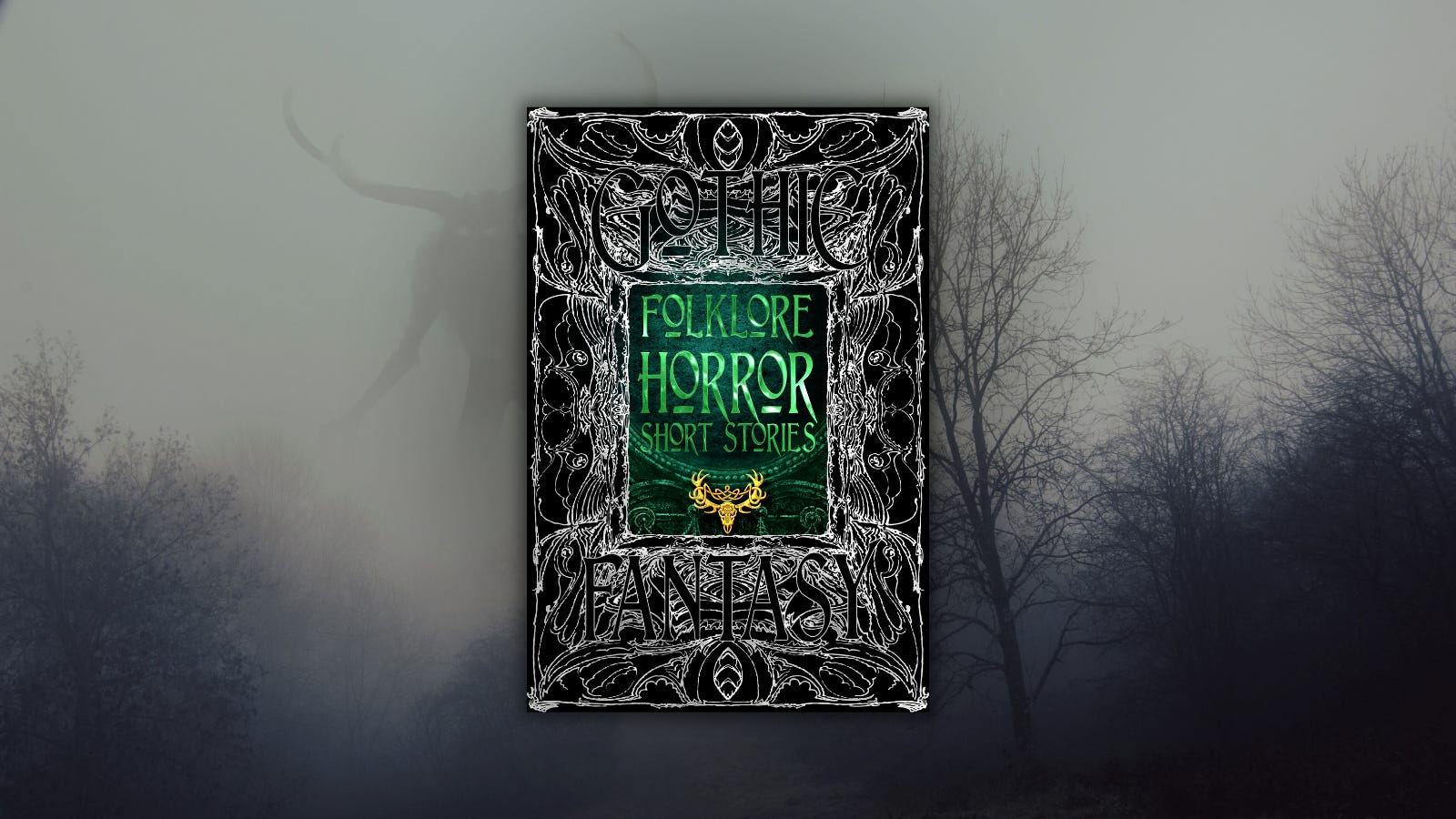
I have publishing news! My short story, ‘Face me. In Darkness.’, will appear in the new Gothic Fantasy anthology from Flame Tree Publishing with an emphasis on Folklore Horror Short Stories.
Our next Gothic Fantasy anthology is focused on all things Folklore Horror, and we're delighted to announce the list of authors included in the book! Available from August 2026 and featuring a foreword by Maria J. Pérez Cuervo, it is packed full of fantastic short stories on the theme, encompassing global mythologies and classic horror rooted in folklore as well as new and recent stories by authors writing today.
I won’t replicate the extensive Table of Contents, which includes stories by an impressive array of living authors plus a selection of tales by past venerable writers. It will be available as a hardcover Deluxe Edition: matte laminated, gold and silver foil stamped, embossed and with 25 illustrations! It will contain 432 pages so you will get your money’s worth!
You read all the details on the Flame Tree Publishing blog post.
Continuing on the theme… back in January I mentioned that I have a novella coming out this year from the Absinthe Books imprint of PS Publishing, which is overseen by Managing Editor, Marie O'Regan.
At the time I could not divulge much, but now I can tease a little more…
The book is called House of Wyrd, and here’s the blurb:
Aly Wyrd, famous art provocateur and magician, is missing on the eve of the opening of her visionary project, the Path of Illumination. It falls to her estranged daughter, Pallas Trismegistus Morrigan Aylward, to navigate through dream, memory and arcane mystery to revisit her history with her mother in ’80s London and ’90s Ireland until Pallas catches up with present-day revelation by walking the road to enlightenment designed by her mother.
I’m thrilled with the cover art, and I’m looking forward to announcing the artist and cover in the coming weeks!
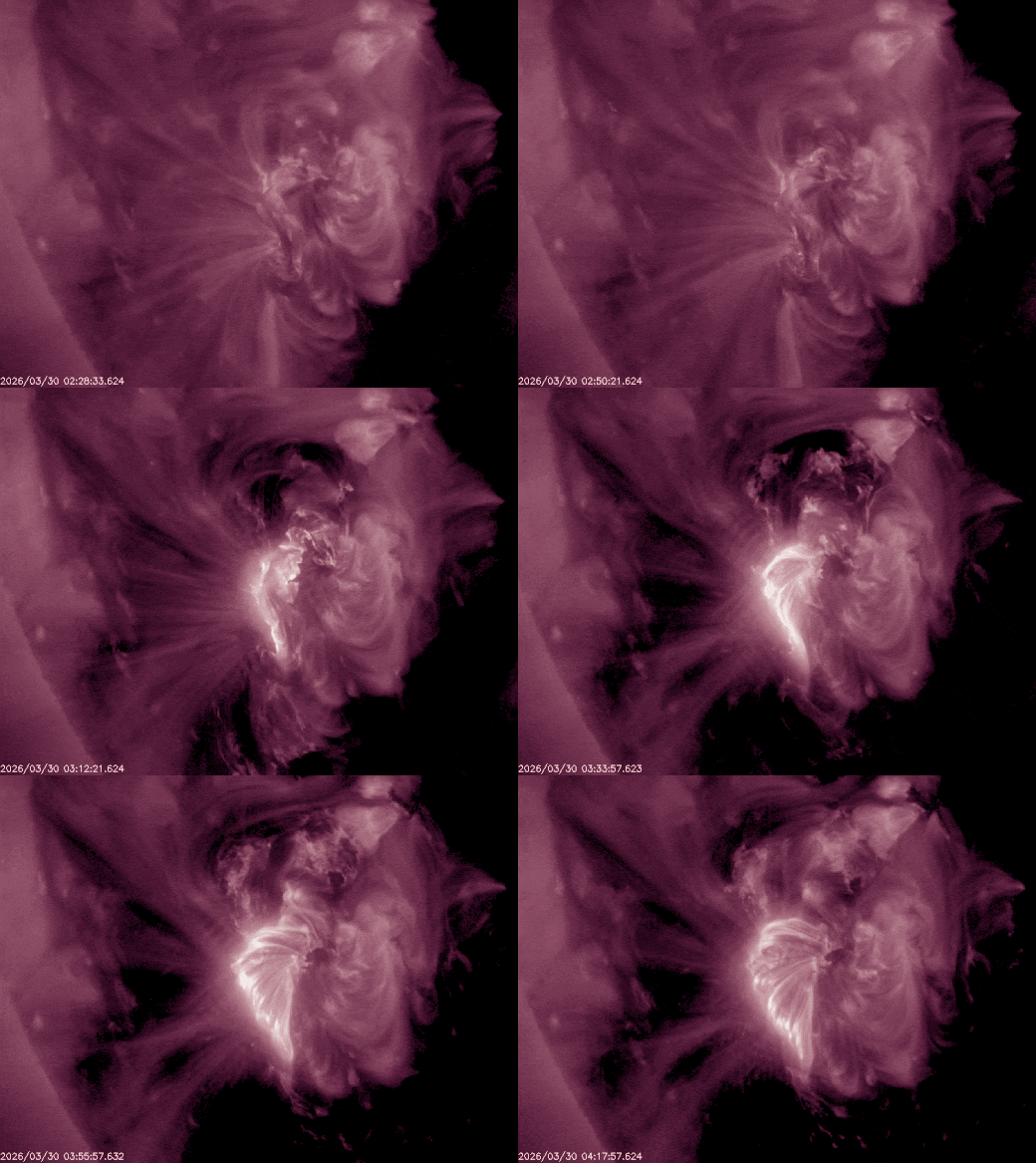
I have not reported on the antics of our beautiful sun lately, because we are definitely entering the descending stage of solar maximum. The sun had three ‘spotless’ days recently, which is the first time since 2022 that scientists observed zero sunspots on the sun, and it heralds we are approaching solar minimum. Although, this spotless record is based on our Earth-facing view of the sun as it rotates. In all likelihood there are sun spots on the far side, out of sight of our probes.
But just because the sun is downshifting into a quieter phase doesn’t mean it can’t surprise us beforehand. Notice the above mini-movie from NASA's Solar Dynamics Observatory showing yesterday's X1.5-class solar flare, which jettisoned a considerable Coronal Mass Ejection towards our planet. (Doesn’t the image look like it turns into a cat?!) The darkening is due to EUV dimming thanks to the sudden departure of solar plasma.
There is a potential for a G3-class geomagnetic storms tonight or tomorrow, and no this is not an April 1st hoax.1 As I’ve mentioned before, aurora are more likely to occur during the periods around Equinoxes, as the Earth’s axis is positioned so its magnetic field is more receptive to particles carried by the solar wind. This is known as the Russell–McPherron effect. So look up if you have clear skies tonight (although we’re close to a full moon so there will be competing glare).
That cat’s breath might rock our world!
Best of luck to the Artemis 2 astronauts: Commander Reid Wiseman, Pilot Victor Glover, Mission Specialist, Christina Koch, and Mission Specialist Jeremy Hansen.
NASA plans to launch the four astronauts on a ten-day trip around the Moon and back on the 1st of April. Let’s hope the sun behaves for their journey!
Whoosh! It’s the opening sequence from the superhero space opera film Flash Gordon (1980), and what a cracking start: Earth is threatened by the extraterrestrial Ming the Merciless, a bored tyrant-magician who is toying with our planet from afar, just for kicks, accompanied by a terrific theme song by Queen.
I doubt I’m the only person to recall the storyline of Flash Gordon currently, because one of the afflictions Ming sends to Earth is ‘Hot Hail’. Lately, our planet has been experiencing an uptick in fireball activity.
A fireball is a meteor that is so bright it’s visible during daylight. There is a constant stream of tiny meteors impacting the Earth’s atmosphere every day, and the majority of them burn up in our atmosphere. To qualify as a fireball a meteor has to be brighter than the planet Venus, which has an apparent magnitude of -4.
An interesting sidebar here is that the apparent magnitude scale is inverse, so the more negative the number the brighter the object. This system probably comes from the Greek wunderkind, Hipparchus (c. 190 – c. 120 BCE) who was an astronomer, geographer, and mathematician, often considered the originator of trigonometry (the Babylonians might dispute this). We know his work mostly via second-hand accounts, since the majority of Hipparchus’ fourteen books have not survived into this age.
Fireball reporting has generally been increasing simply because we can detect them easier, and more people have cameras on their persons, cars and properties. Yet the increase of fireballs across the world in March 2026 has been anomalous, and more of them than expected have caused an explosive detonation in the atmosphere (an airbust). This is when they are referred to as a bolide, from the Greek word bolis, which means ‘missile’ or ‘flash’ (‘A-AH! He’ll save every one of us!’)
There are several agencies tracking these events, the Fireball Recovery and InterPlanetary Observation Network (FRIPON) in France, the European Fireball Network (EFN)2 and the American Meteor Society (AMS).
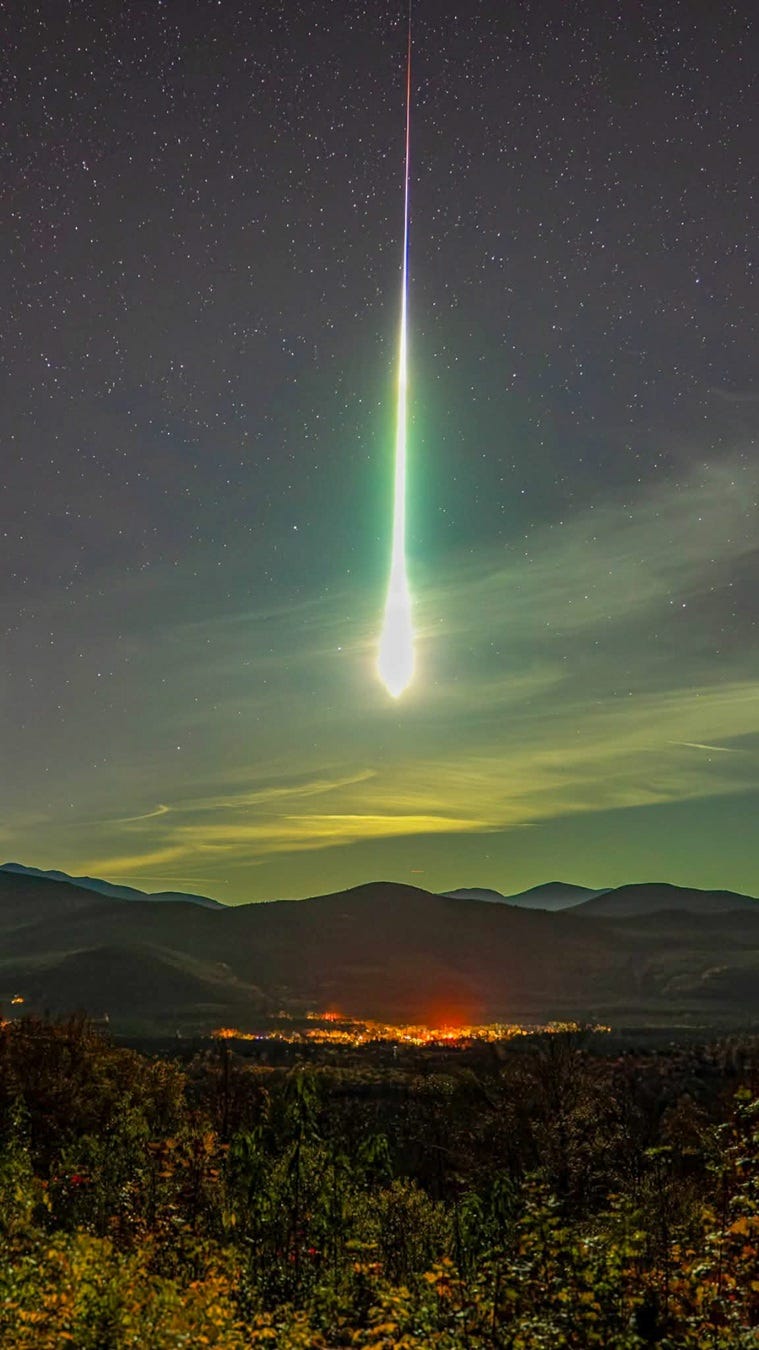
The AMS has published a significant analysis of the phenomenon for the first quarter of 2026: ‘Has Something Changed in the Near-Earth Meteoroid Environment?’
The short answer is: yes, but they don’t know why.
Pieces of the larger fireballs have been found, and all of them have come from known objects. The most powerful event was a St Patrick’s Day special in Ohio, when a 2-metre meteor exploded about 48 km above ground with the energy equivalent of 26 tons of TNT. The recovered specimens are achondrites (specifically eucrites), believed to be chunks of Vesta, the second-largest object in the asteroid belt.
I mentioned Vesta back in December 2023, in a post entitled ‘Wonder’. This large asteroid is located in the main belt between the orbits of Mars and Jupiter, and was part of a quartet of rapid discoveries in the beginning of the nineteenth century. It started with Ceres (1801), Pallas (1802), Juno (1804), and Vesta (1807). Initially, they were considered new planets, but that was adjusted later when astronomers realised the copious number of asteroids in the area. They are a significant size and Ceres is designated a dwarf planet (like Pluto).
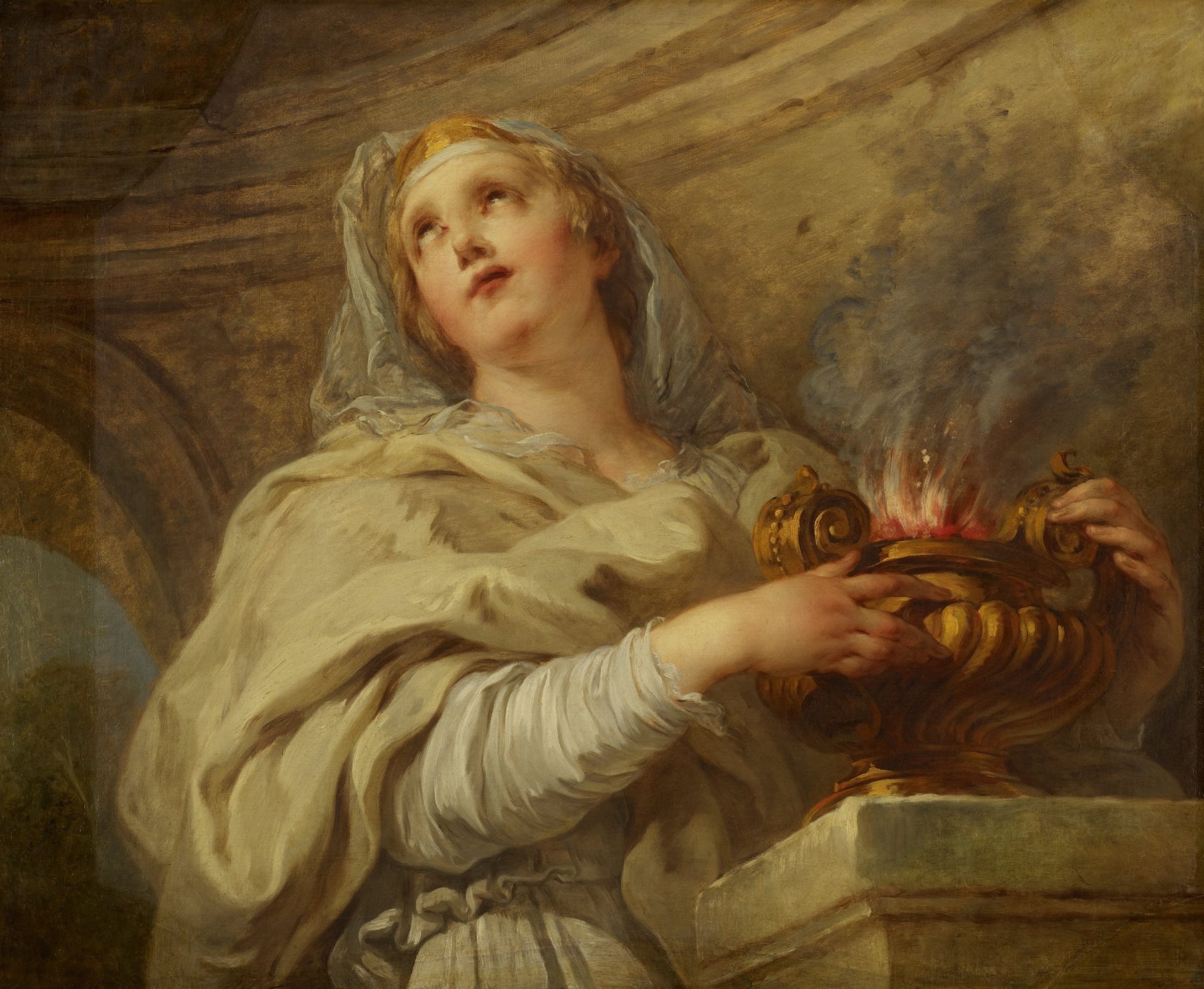
Vesta’s name comes from the Roman goddess who was the protector of the hearth, home and family. An eternal flame burned in her sacred temple in Rome, tended by the Vestal Virgins.
These priestesses were selected before the age of ten years old by the pontifex maximus (chief high priest of the College of Pontiffs) and served for thirty years. The Vestals swore to remain chaste during this period. They could marry afterwards, but few elected to do so; some signed up for a second term. The priestesses served a number of functions, but their most important duty was keeping Vesta’s flame lit continuously, which protected Rome from its enemies. Vestals were personae sui iuris, ‘sovereign over themselves’, and enjoyed many privileges denied to women at the time.
If a Vestal had sex it was a death sentence, but because each Vestal represented Rome, it was forbidden to spill her blood. There was a way around this restriction:
When condemned by the college of pontifices, [the Vestal] was stripped of her vittae and other badges of office, was scourged, was attired like a corpse, placed in a close litter, and borne through the forum attended by her weeping kindred, with all the ceremonies of a real funeral, to a rising ground called the Campus Sceleratus just within the city walls, close to the Colline gate. There a small vault underground had been previously prepared, containing a couch, a lamp, and a table with a little food. The pontifex maximus, having lifted up his hands to heaven and uttered a secret prayer, opened the litter, led forth the culprit, and placing her on the steps of the ladder which gave access to the subterranean cell, delivered her over to the common executioner and his assistants, who conducted her down, drew up the ladder, and having filled the pit with earth until the surface was level with the surrounding ground, left her to perish deprived of all the tributes of respect usually paid to the spirits of the departed.3
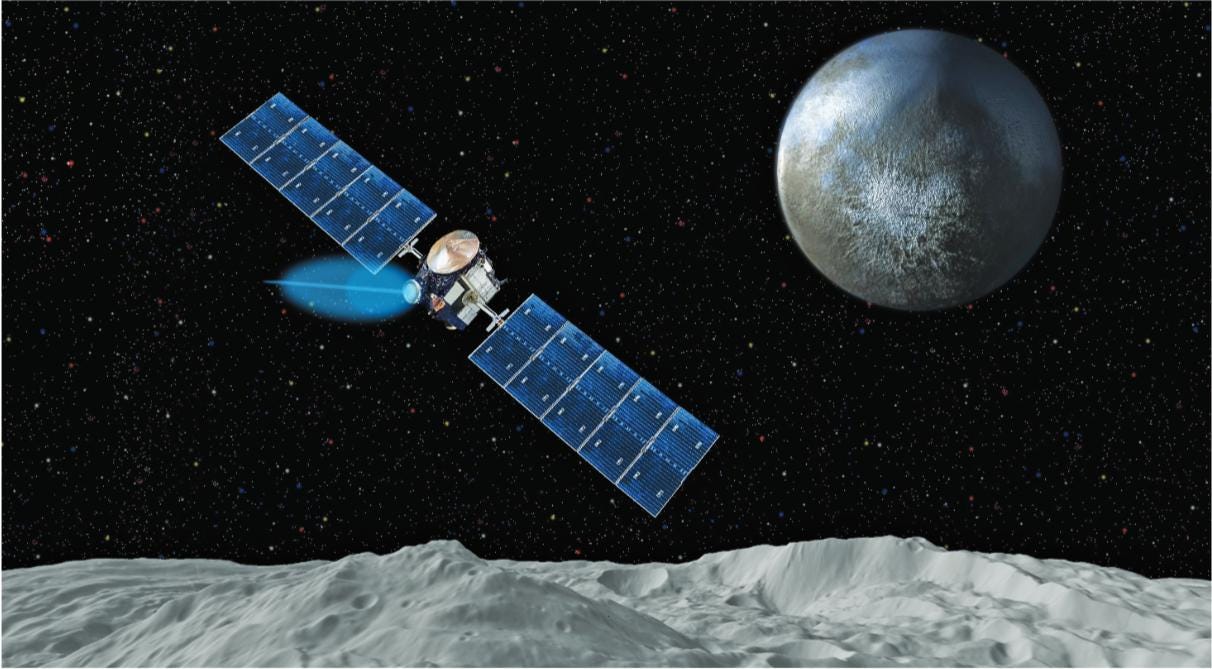
In September 2007 NASA launched a space probe called Dawn: its mission was to examine Vesta and Ceres. Dawn entered an orbit around Vesta in July 2011, and completed a 14-month survey before it departed for Ceres. It arrived at the dwarf planet on March 2015, and continued its mission until November 2018 when its hydrazine fuel was exhausted — its flame went out.
The mute probe remains in a steadfast watchful vigil around Ceres.
In his final Dawn Journal entry, Dear Dawntasmagorias, the Dawn Mission Director and Chief Engineer, Marc Rayman wrote:
Dawn, however, will never again explore alien worlds. It will never again emit a bluish beam of xenon ions. It will never again communicate with beings on the faraway planet where its voyage began. It will never again perform any of the functions or tasks it executed so admirably on its remarkable journey. For decades, and quite possibly even for centuries, the ship that undertook a long, daring, difficult and successful deep-space expedition on behalf of humankind will remain silently in orbit around Ceres. It has become an inert celestial monument to the power of human ingenuity, creativity, and curiosity, a lasting reminder that our passion for bold adventures and our noble aspirations to know the cosmos can take us very, very far beyond the confines of our humble home.
The Irish station of the EFN is in Galway.
Ramsay, William, Vestales, in Smith, William, A Dictionary of Greek and Roman Antiquities, John Murray, London, 1875, pp. 1189–1191.
Aw, Dawn. I get so sad when these intrepid little space robots run out of juice. Congratulations on the publishing news!
Congrats on your story and novella! And holy fireballs from the sky!