

flipping sun
it's hot, it's August, the Sun's poles are flipping, and its magnetic fields are twice as strong as previously thought

Dear word explorer,
Today’s check-in on our Sun’s activities uncovered this fantastic image taken by David Wilson on August 17, 2025 via his home telescope in Inverness, Scotland.

This is a ‘solar plasma twister’, also known as a solar tornado. This occurs when solar magnetic fields twist and swirl a filament of superheated plasma into the sun's atmosphere, creating a tornado-like structure. These tornadoes can reach astonishing speeds — up to 300,000 km/h — and can extend thousands of km above the Sun's surface.
For comparison’s sake, the highest category tornado on Earth, rated F5, has maximum wind speeds in the region of 261—512 km/h and are usually a few km in height and width.
The Sun also flung out a significant coronal mass ejection during a long M-class solar flare, so if you have clear skies at Northern latitudes you might spy some beautiful displays tonight or tomorrow.
It’s likely we’re at the peak period of solar maximum for this solar cycle 25, which means we’re in the middle of the flip, i.e. the Sun’s magnetic polarity reversal. Don’t panic, this is a cyclical process that occurs roughly every 11 years around solar maximum.
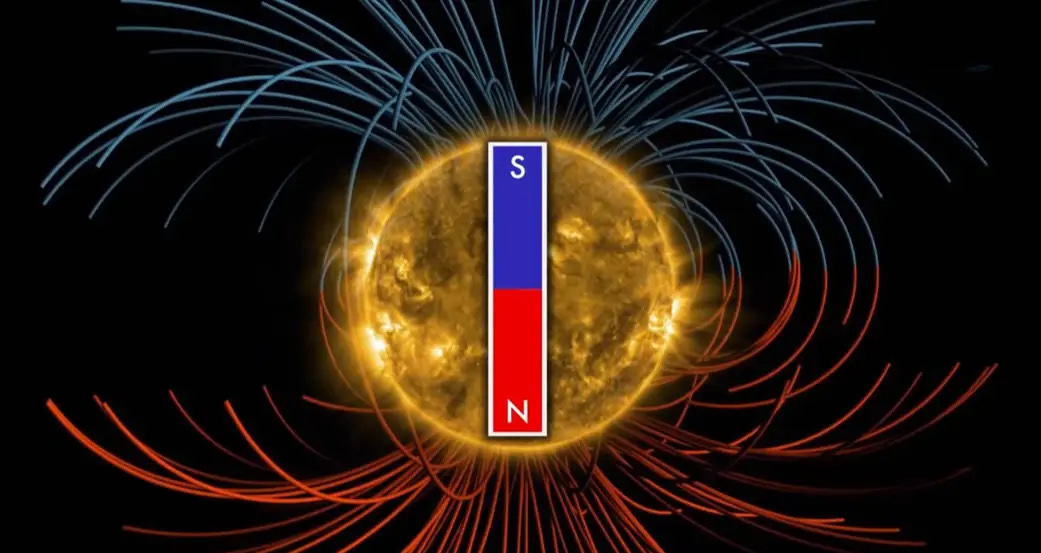
The Sun acts like a ginormous magnet with a field running between its north and south poles, and during a solar cycle its internal magnetic dynamo twists and distorts its fields due to differential rotation between the equator and the poles. This causes the magnetic field lines to become warped and tangled inside the Sun and create regions of intense magnetic activity on the surface (sunspots).
At the same time, the magnetic fields of opposite polarity to the current polar fields slowly migrate toward the Sun's poles. These opposite polarity fields accumulate at the poles, thus weakening and eventually cancelling the existing polar magnetic field. When the polar fields’ strength drops to near zero, the polarity reverses, and the north and south magnetic poles switch places.
It sounds dramatic, but it’s not not instantaneous, and can take several months or longer to complete. Checking online, this flip has been predicted since late 2023 and much of 2024, so it’s likely in progress.
A rather more startling announcement occurred in June this year after a study led by scientists at the U.S. National Solar Observatory (NSO) revealed that one of NASA's primary instruments for measuring the Sun’s magnetic field—the Helioseismic and Magnetic Imager (HMI) aboard the Solar Dynamics Observatory (SDO)—may have been detecting only about half of the Sun’s true magnetic strength. The NSO reports:
This missing magnetic strength may explain why models based on HMI data routinely underestimate the intensity of solar wind and the interplanetary magnetic field measured near Earth and by missions like Parker Solar Probe. If the Sun’s magnetic field is twice as strong as we thought, it could force a rethink of everything from solar storm forecasting to the origin of high-energy space weather events.
This is the hard work of science: constantly reviewing data and observations with an open and curious mind, allowing for unexpected revelations that upset previous convictions.
All hail our fiery star!
We always knew it was mighty, but now it’s magnetically twice as powerful!
Let’s flip subject… here’s a fun fact about the current lunar cycle.
It all ties together, I swear, because soon it will be a particularly good time for sky watching or seeking out Northern/Southern Lights.
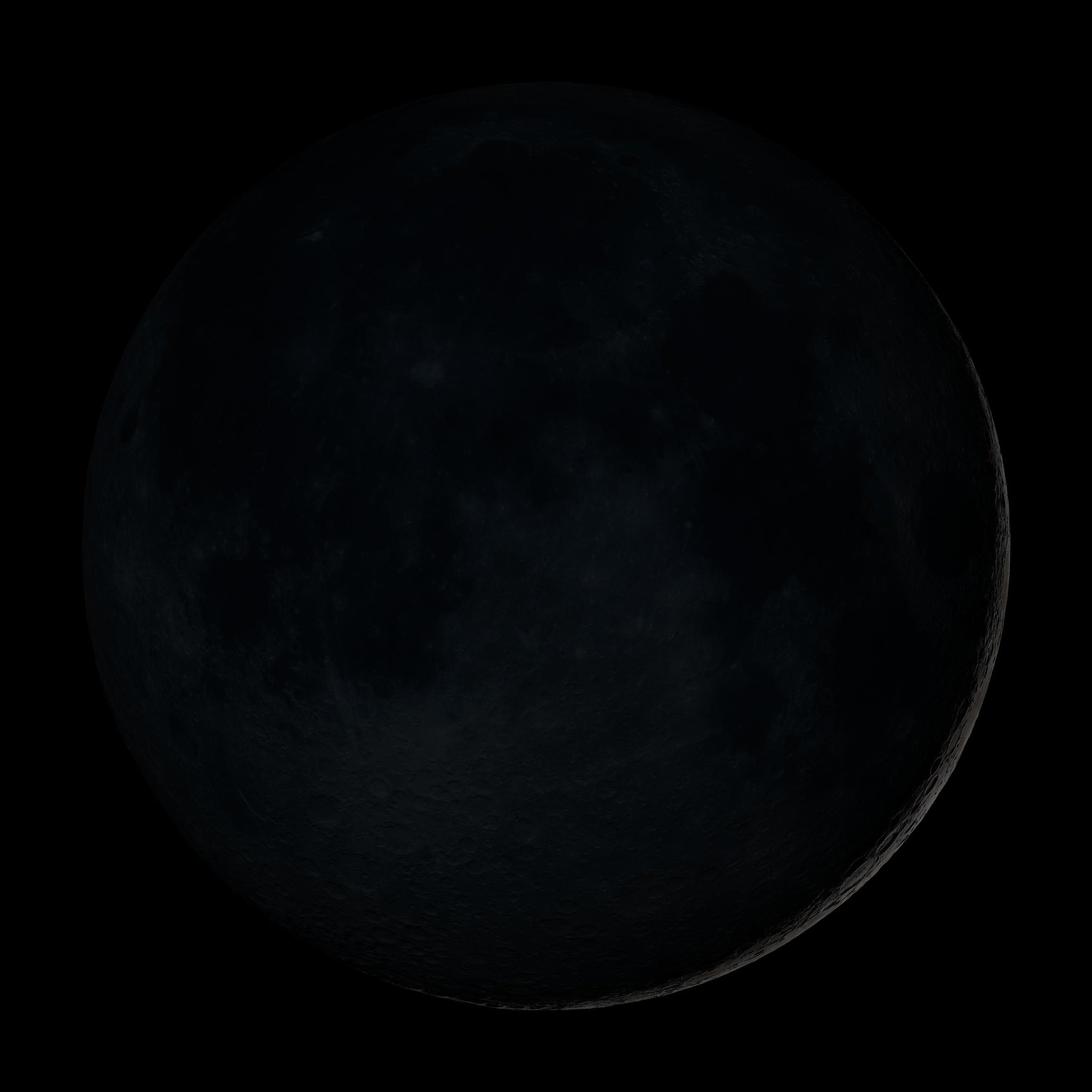
This coming New Moon on the 23rd of August (in Ireland) will be termed a ‘Black Moon’, which is an uncommon lunar event. It’s the third New Moon in an astronomical season that has four new moons instead of the usual three. This occurs roughly once every 33 months. This does not mean the skies will be extra dark—this is not a competition at a Goth festival.
As usual for a New Moon, its dark side will face the Earth, making it essentially invisible from our perspective. Without the interfering moonglare, this will provide the best stygian skies of the month, making it perfect for stargazers.
The annual Perseids meteor shower1 peaked from 12–13 August, but they will continue until the 24th, so you may yet spot meteors and fireballs with long scintillating tails if you can venture outdoors under dark skies after midnight.
Gaze up at our twinkling heavens and make a wish.
Enjoy the fine days! Summer is waning.
Soon, there will be more night than day.2
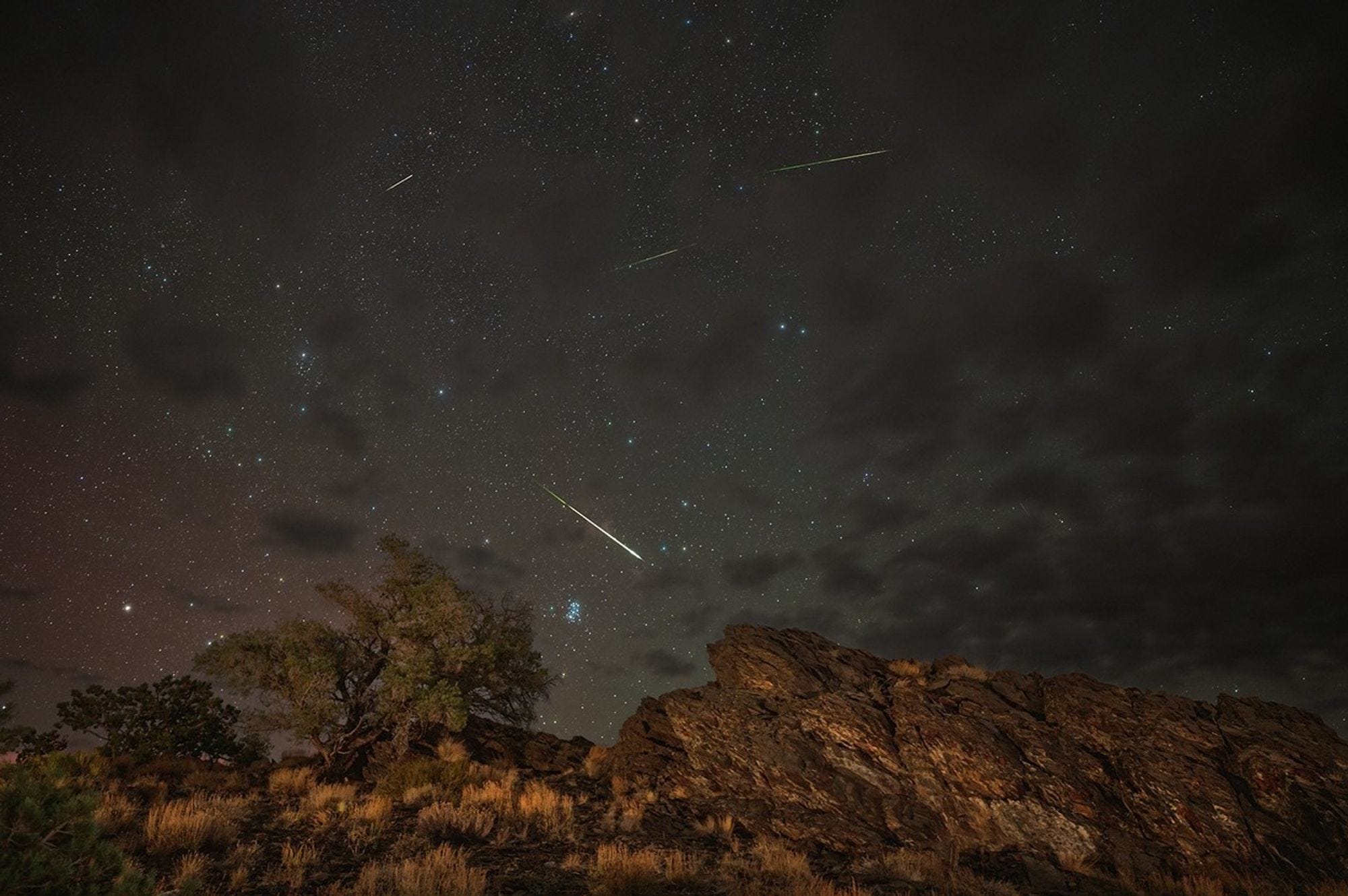
The yearly Perseids Meteor Shower occurs when Earth passes through debris left by comet 109P/Swift-Tuttle. Its particles enter Earth's atmosphere at tremendous speeds, burning up and streaking across the skies, seeming to radiate from the constellation Perseus.
But good news for our Antipodean chums, since longer days beckon.
Wow!