

pale imitations
polling potential future chats, and our burdened night skies

Dear word explorer,
I had a terrific conversation last week with writers Helen Grant and Tom Mead about ‘The Magic of Novellas’, although Tom’s audio was affected by a connection issue. If you want to listen back you can do so here:

Our three novellas, Steal Me, House of Wyrd, and The Lamp in the Window, are shipping from Absinthe Books (a PS Publishing imprint) very soon.
I was so pleased to receive a thoughtful advance review from Jim Mcleod at the Ginger Nuts of Horror review web site for House of Wyrd. There are a lot of details in the review, but here’s the beautiful summary at the end:
House of Wyrd is a novella that does what the best horror does: it makes the strange feel familiar and the familiar feel strange. It walks the line between magic and psychology, between the supernatural and the all-too-human, and it never loses its footing. McHugh has written something that feels both timeless and entirely of this moment—a book about the cost of ambition, the weight of inheritance, and the long, winding road back to the people we love.
The mountain is waiting. Walk it.
I conducted four weekly live chats in a row via the Substack platform, all clustered around the publication of my novella, and I thoroughly enjoyed the experience. I love meaningful conversations with people, and I’m considering branching out and talking to other authors/artists, or doing short reviews or chats about specific subjects.
Deciding to investigate live video conversations was not a sudden decision — I’d been mulling it over for at least nine months in advance, but I wanted a specific project to try it out. Now that my mini-series is complete, I wonder if there is any appetite among my readers for me to continue…
Thus, the reader poll!
This poll will be open for three days and after that I’ll assess the results, so I’d appreciate your input.
A weekly newsletter and a live video maybe too frequent, or difficult for me to maintain. I think a variety might be the way to go, but I’m asking for your opinions:
Feel free to leave a comment on this post if you have other suggestions.
My attention was grabbed recently by the alarming headlines that California-based startup Reflect Orbital gained the approval of the U.S. Federal Communications Commission (FCC) to test a ‘space mirror’ satellite to beam sunlight onto the night-side of the Earth.
My knee-jerk reaction was a combination of ‘how can the FCC rule on a project that affects the entire globe?’ and ‘this sounds like a Bond-villain tactic’… well, the latter is certainly true!
Die Another Day (2002) is the twentieth film in the James Bond series, directed by Lee Tamahori, written by Neal Purvis & Robert Wade, and starring Pierce Brosnan as Bond and Halle Berry as Agent Jinx. I won’t explain the convoluted plot, but the baddie of the movie is Gustav Graves (Toby Stephens), a bonkers British entrepreneur and the alter ego of Colonel Tan-Sun Moon.
A key element is that Graves announces a orbital mirror satellite called Icarus, with the altruistic goal to provide year-round sunshine for agriculture. Everyone who has ever witnessed the damage inflicted by a mean kid focusing sunshine via a mirror or a magnifying glass upon insects, or a Jaguar car1, knows this is a cover story. Of course, Icarus is put to evil ends, including an attempt to incinerate Bond.
People don’t trust the PR of corporations who invest millions in weird tech with dubious applications, especially when it is being framed as beneficial for working people. Historically, the millionaires make money and the ordinary people get burned.
Even worse, for the fantasy nerds among us, they named this satellite Eärendil-1.
Eärendil is the name of a heroic half-elf in JRR Tolkien’s legendarium. After a long series of trials Eärendil is tasked with carrying a shining jewel (a Silmaril) nightly through the heavens. It is known as the Star of Eärendil, which is considered the light of hope. These positive mythic associations are being coopted by a commercial endeavour.

How can the FCC rule on this? Well, it doesn’t have the authority to do so, since its job is to regulate ‘interstate and international communications by radio, television, wire, satellite and cable in all 50 states, the District of Columbia and U.S. territories.’2 Eärendil-1 might be a satellite, but its job isn’t communication.
Astronomers, already worried about the overcrowding of the night sky by satellites3, were infuriated by the decision. There were 1,800 comments on the application, but the FCC pointed out their worries were not pertinent4:
We find that concerns about Earendil-1’s impacts on optical astronomy fall outside our review and authorization of the space station and are not a basis for denial of or additional conditions on Reflect Orbital’s operations. The Commission’s rules do not address the protection of optical astronomy, and thus we decline to interpret commenters’ concerns in connection with the Commission’s mandate under the Communications Act in this Order, as discussed above. In any event, Reflect Orbital contends that the Earendil-1 satellite is designed to mitigate harmful interference from reflected light and states that it is already actively working with the astronomy community to establish exclusion zones to protect optical astronomical research sites and coordinate to protect optical astronomy in general.
What’s the fuss, Reflect Orbital says it’s going to ‘mitigate’ any harmful interference?! Why not believe the breezy assurance by a company backed by Venture Finance company, Lux Capital.
What will Eärendil-1 do? Once in geo-stationary orbit the satellite will unfurl an 18 x 18 m reflector that they claim will create a 5 km circular spot of light on the Earth with about the brightness of a full Moon. Not the space laser of Die Another Day, and hardly enough light to power a solar array.
Reflect Orbital’s web site is awash with pretty sunny images of tractors busily buzzing around on farms, and construction sites no longer inhibited by regular working hours. How great! Bring on the AI-enhanced robots to dig up the world under the gaze of reflected light.
The first satellite is a test run. The company wants to have 1000 satellites in orbit by 2028, with up to 50,000 by 2035.
Sky & Telescope reports:
Reflect Orbital would sell reflected sunlight to parties wanting nighttime illumination and to solar energy farms. The company’s CEO, Ben Nowack has stated, “It would be really great if we could get some solar energy before the Sun rises and after sunset, because then you could actually charge higher prices and make a lot more money.”
Most articles reporting on this plan don’t even touch upon the harm this plan will cause to plants, insects, animals and humans from the disruption of normal diurnal cycles.
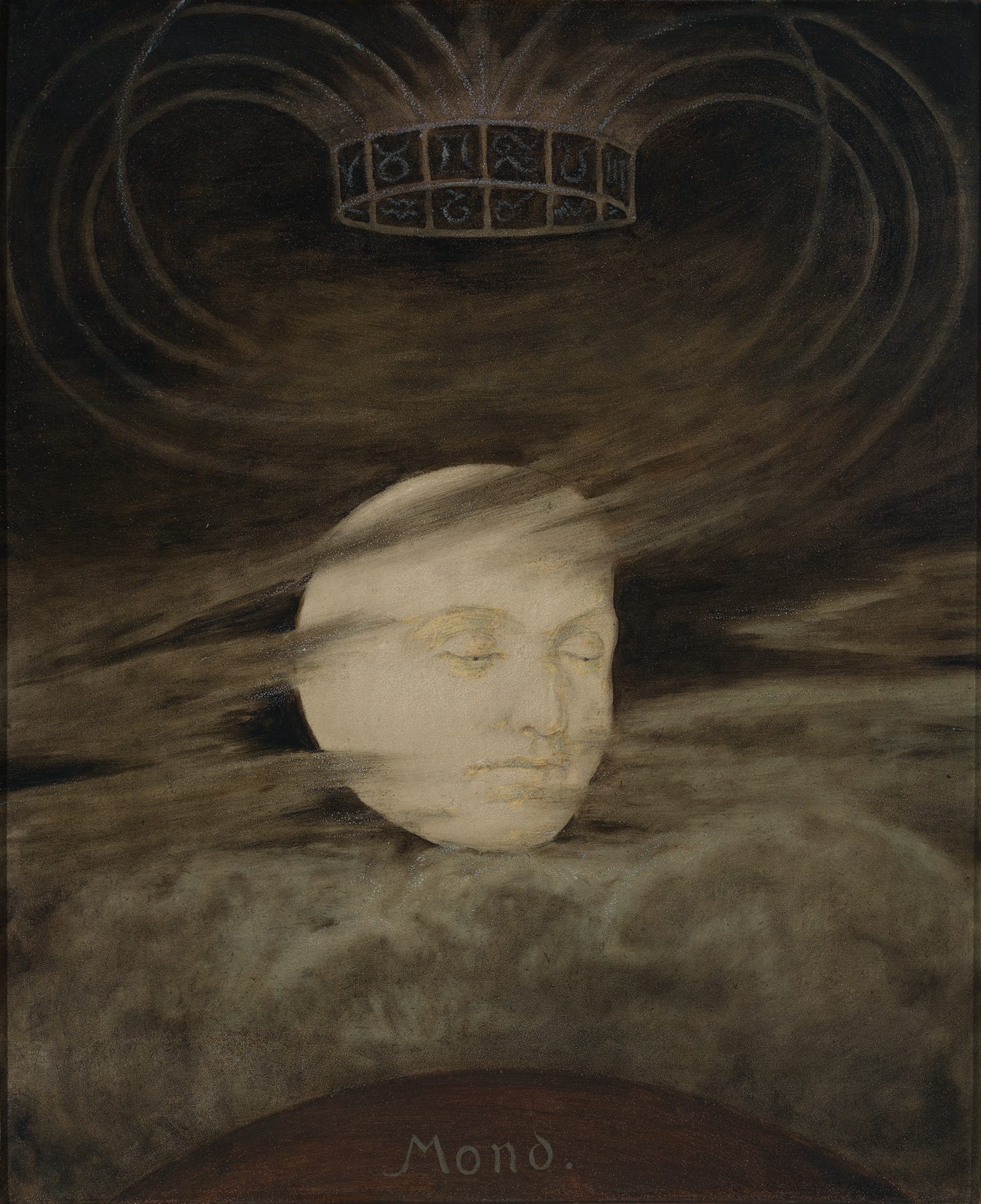
Can Reflect Orbital succeed with its mission to populate our night skies with fifty-thousand pale sun imitators?
I hope not! This needs to become the new protected domain.
Olivier Hainaut from the European Southern Observatory, Germany has noted:
“Low Earth orbit is a celestial seashore that provides immense value to modern life, from global connectivity to our clear access to the Universe. However, we must manage the footprint of mega-constellations — from the light pollution affecting astronomy to the atmospheric effects of satellite re-entry — to ensure this resource remains pristine and accessible for future generations.”5
In late August 2013, during the construction of the ‘Walkie-Talkie’ building in Eastcheap, the City of London, Martin Lindsay parked his Jaguar nearby for two hours and returned to discover parts of his expensive car had melted. A note on his windscreen stated: ‘your car's buckled, could you give us a call?’ Of course the construction company claimed to have run all the proper impact studies, but during a specific period during the summer the sun was scorching the pavement and buildings for a couple of hours every day.
What We Do - on the FCC web site.
I’ve discussed this before: by 2029 there could be 57,000 satellites in orbit launched by a variety of competing companies.
From the FCC Order and Authorisation.
“Beyond the limit”: one million satellites and mirrors in space pose grave threat to the night sky.
Got to admire the simple-mindedness that assumes the reflected beam of light will not be scattered across miles of sky by atmospheric particles etc.
I’m stunned by the hubris. It’s like a contest now to see who can come up with the worst possible future!