

wandering
through history, food, and fluff

Dear word explorer,
I skipped a newsletter last week — a rare occurrence — because another creative project hijacked my mind-space. I re-routed my neuro-GPS and have returned.
For a long time I’ve been pondering the dilemma of creative innovation. What circumstances provoke it? How can you facilitate it? Why switch tracks if the trolley is not rushing towards a conundrum?
Because nobody likes eating stale crackers.
Sure, if nothing else exists in the cupboard and you’re desperate for food, stale crackers lend the illusion of nourishment.
Crunch, crunch, crunch. Sip water to wash the gravel and dust down your throat to form a heavy paste in your gut. It fills you down.
An hour later your head is stuck in the most awkward cabinet, pushing aside boxes of out-of-date multiseed flatbreads, with an unfilled need yearning for its dream match.
Strangely, in our world of miracles dry crackers are plentiful.
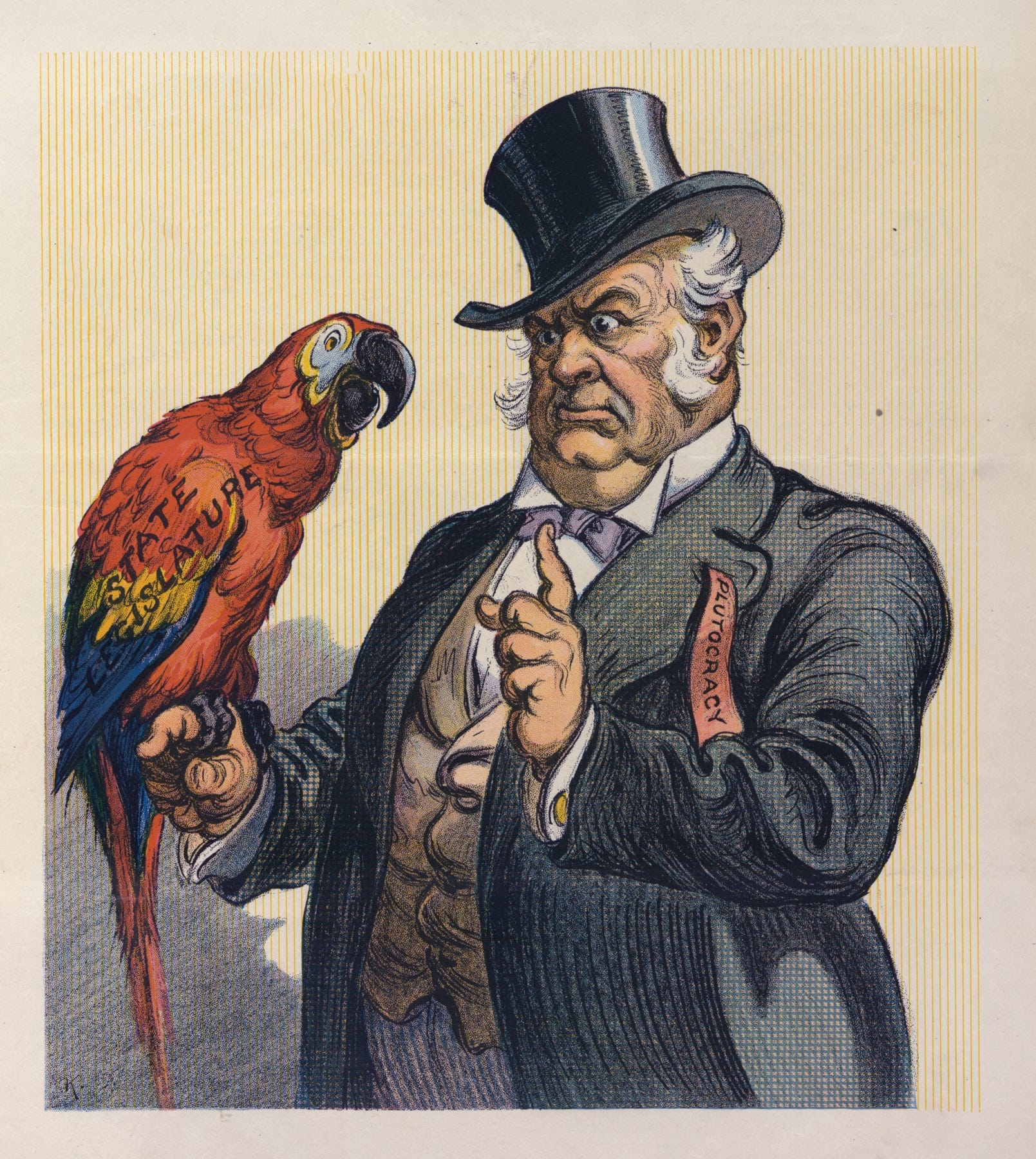
Udo Keppler (1872 – 1956) was an American political cartoonist and publisher, and the son of Joseph Keppler (1872–1956), who was one of the co-creators of the humour magazine Puck (1876 - 1918).
The above cartoon, drawn in 1909 by Udo, ‘…shows a well-dressed man labeled “Plutocracy”, wearing a top hat, holding a parrot labeled “State Legislature” on his right hand, trying to get it to repeat a phrase after him, “We don't want an Income-Tax Amendment!”, and promising it “some nice crackers” in return for correctly learning to repeat the phrase.’
I rifle through online art catalogues a great deal, and I’m often struck by how the themes of previous generations contain a remarkable resonance to our current age.
If the parrot repeats the phrase it earns a cracker, but remains in the cage. The plutocrat eats well at the head table, served by the help.

This 7th of January 1885 cover of Puck was drawn by Joseph Keppler and depicts a doctor and a sexton (in charge of digging graves) greeting each other over a pretty stick of candy. This was an era when children’s sweets were polluted with dangerous chemicals because pretty treats were a more attractive and commercial product, thus fattening the coffers of the owners of factories producing mass-manufactured confections.
The artist did his homework. Each of the candy stick’s colored bands carries the name of an adulterant or food dye that matches its color in the lithograph. At the top is a green band for chrome green (chromium oxide), next a white one for chalk, then red for red lead (lead oxide). Below are white for arsenic (arsenic trioxide), yellow for chrome yellow (lead chromate), red for vermilion (mercury sulfide), white for arsenic again, then green for verdigris (copper acetate). At the bottom is a white band for glucose (used as an adulterant for sugar and sometimes containing acidic residue from its manufacturing process). All these ingredients were unregulated and readily accessible in apothecary shops and pigment stores and from wholesale sources.
The 19th century saw explosive growth in the number of chemists and in chemical knowledge, including improved understanding of metallic elements and the dangerous dyes made from their compounds. But in a country of small-government ideology and laissez-faire attitudes in commerce, little was accomplished to protect the public despite agitation by journalists, cartoonists, physicians, and scientists. Around the turn of the century the Progressive movement’s muckraking investigations included larger and more frequent exposures of defective food products. Upton Sinclair’s 1906 book about the meatpacking industry, The Jungle1, is the most prominent example of many calls to arms. Just months after his book was published, Congress passed the nation’s first Pure Food and Drug Act, which closed one era of food safety advocacy and opened another.2
Sweets do little to counteract true hunger, although they are momentarily delicious.
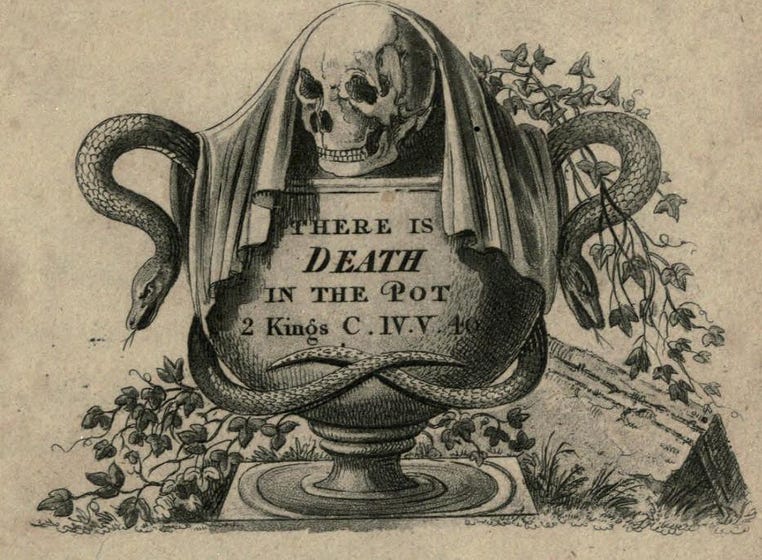
One of the first texts to tackle the issue of food contaminants was A Treatise on Adulteration of Food and Culinary Poisons (1820) by Frederick Accum, a German chemist who established his career in London.
He added a quick synopsis on the front page, above the skull-topped dual-serpent urn, which promised that it was ‘A Treatise on Adulterations of Food, and Culinary Poisons. Exhibiting the Fraudulent Sophistications of Bread, Beer, Wine, Spiritous Liquors, Tea, Coffee, Cream, Confectionery, Vinegar, Mustard, Pepper, Cheese, Olive Oil, Pickles, and Other Articles Employed in Domestic Economy. And Methods of Detecting Them.”
Here are a few examples of the food cheats he discovered:
By this time tea and coffee drinking had become popular in England but, being imported, both were expensive and as the fashion spread cheaper varieties were needed for sale to the masses. Many of these were not genuine tea and coffee but were made to look like the real thing by chemical treatment. Spent tea leaves and coffee grounds could be bought for a few pence per pound from London hotels and coffee shops. The used tea leaves were boiled with copperas (ferrous sulphate) and sheep's dung, then coloured with prussian blue (ferric ferrocyanide), verdigris (basic copper acetate), logwood, tannin or carbon black, before being resold. Some varieties of cheap teas contained or were made entirely from the dried leaves of other plants. Exhausted coffee grounds were treated in a similar way, adulterated with other roasted beans, sand/gravel, and mixed with chicory, the dried root of wild endive, a plant of the dandelion family. Chicory itself was sometimes adulterated with roasted carrots or turnips and the dark brown coffee colour was achieved by using 'black jack' (burnt sugar).3
Accum’s book angered a great deal of powerful people. The following year he was accused of tearing out pages of books he was studying in the library of the Royal Institution, and charges were levelled against him. With his reputation in tatters, Accum scarpered to Germany to avoid a trial, and the food fraud continued.
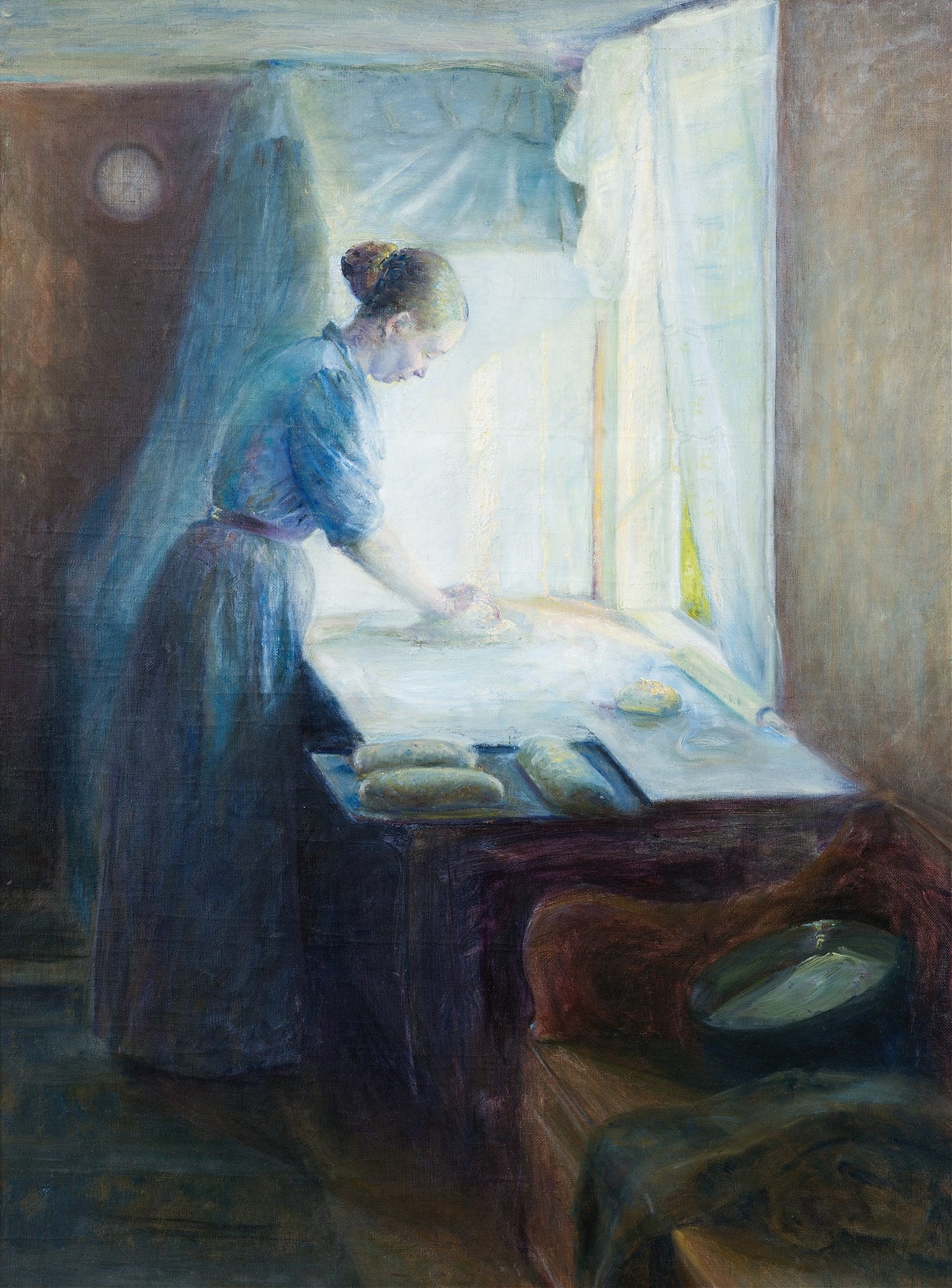
Accum wasn’t the first person to ring the alarm about fake foodstuffs. One of the staples of the human diet — bread — had become a source of concern by the 18th century once cities began to increase in size rapidly. The concentration of people lead to high demand and bakeries struggled to match it, and especially the prestige item: white soft bread.
By 1757 an act of parliament called the ‘Making of Bread Act’ was designed to protect the public health from additives, since it was discovered that bakers were covertly adding alum, chalk or powdered bones to whiten their dough, as well as other ‘ingredients’ such as plaster of Paris, pipe clay or sawdust which would add weight to loaves.
Bakers laboured and sweated for long hours in hot, unhygienic conditions, which affected the quality of the bread, plus the workers were likely to contract ‘baker’s lung, an asthmatic condition that reduced the lifespan of those afflicted, particularly for those living in cities beset with smog. It’s a handy reminder of the toil of yesteryear, and how some automation has wrought useful changes.
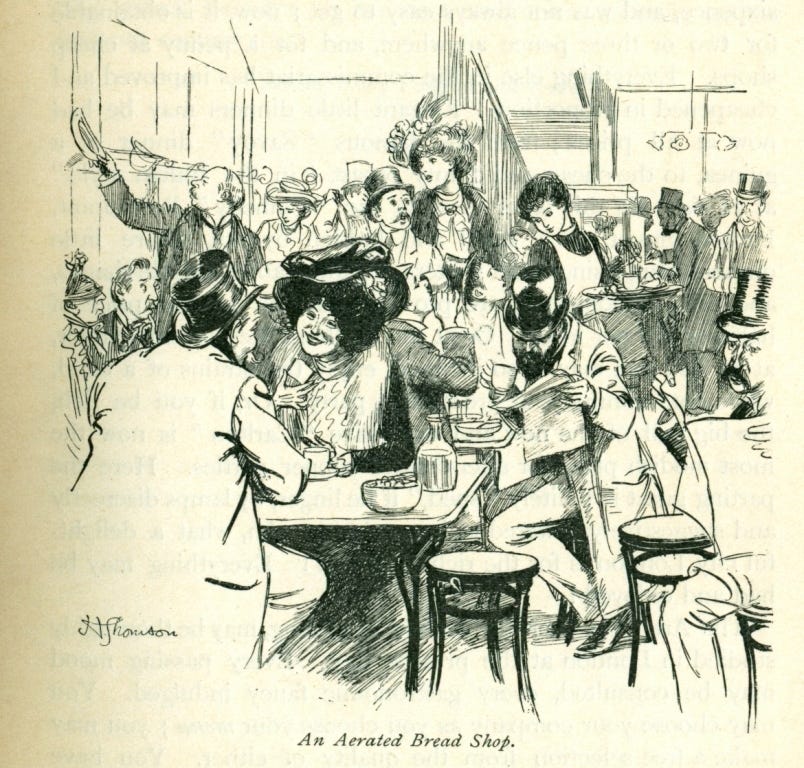
It wasn’t until the mid 19th century, a Scottish medical student with a chemistry background, John Dauglish, put together a system of leavening bread with carbon dioxide using machine-assisted production. His Aerated Bread Company (ABC) produced cheaper, uniform bread faster than ever before in a safe environment. Daughlish’s methods were adopted around the world.
Doughlish died at age 42, and did not witness the incredible effect his company would have upon society. It launched the ABC tea rooms (or ABC shops), which offered a cheap menu of tea, sandwiches, and cakes, becoming an international franchise across the UK, America and Australia.
Importantly, ABC tea rooms were one of the first public places Victorian women could go alone or to socialise with other women. This was in large part because of their status as ‘temperance refreshment rooms’, with no alcohol being served. By creating a respectable public forum where women could gather, ABC tea rooms became crucial meeting places for both Suffragists and their violent counterparts, the Suffragettes. This led Margery Corbett Ashby, suffragist and Liberal politician, to call the advent of the ABC shops ‘an enormous move to freedom’. The printed event programme created for the International Council of Women’s Congress held in London in 1899, specifically recommends ABC shops to visiting delegates.4
ABC tea shops were once so commonplace they appeared in contemporary poems, literature, letters and satirical essays.
While A. A. Milne was an editor of the humour journal Punch, he produced a collection of essays called Not That It Matters (1919). One piece called “The Diary Habit”, suggests a fun way to record your everyday adventures, and contains a passing reference to an ABC.
TUESDAY.—”Letter from solicitor informing me that I have come into £1,000,000 through the will of an Australian gold-digger named Tomkins. On referring to my diary I find that I saved his life two years ago by plunging into the Serpentine. This is very gratifying. Was late at the office as I had to look in at the Palace on the way, in order to get knighted, but managed to get a good deal of work done before I was interrupted by a madman with a razor, who demanded £100. Shot him after a desperate struggle. Tea at an ABC, where I met the Duke of —. Fell into the Thames on my way home, but swam ashore without difficulty.”
While reading this I am reminded of phishing scams, YouTube videos and Instagram Reels of go-getters lauding productivity hacks, describing schedules for maxxing wellness, rules for galvanising brainstorming sessions, and the humble reminder to close out the day with gratitude circles at the blessed homestead.
Milne was anticipating the future through observation of his present.
He later adds in his charming essay:
Yes; I suspect that a good many diaries record adventures of the mind and soul for lack of stirring adventures to the body. If they cannot say, “Attacked by a lion in Bond Street to-day,” they can at least say, “Attacked by doubt in St. Paul’s Cathedral.” Most people will prefer, in the absence of the lion, to say nothing, or nothing more important than “Attacked by the hairdresser with a hard brush”; but there are others who must get pen to paper somehow, and who find that only in regard to their emotions have they anything unique to say.
Milne, you wound me!
Too much navel-gazing only uncovers fluff.
Regarding The Jungle, Sinclair quipped, “I aimed at the public's heart and by accident I hit it in the stomach.”
‘Our Mutual Friend: Candy stores in the 19th century sold sweets as deadly as they were delicious.’ by Burt Hansen.
‘The fight against food adulteration’ by Noel Coley.
‘Fermenting revolution: The scientific and technological battle against bad bread had a role in women’s liberation.’ by Phoebe Arslanagic-Little.
Fascinating!
Phew! Amazing the human race has managed to survive...